

There is no gardening without humility. Nature is constantly sending even its oldest scholars to the bottom of the class for some egregious blunder.
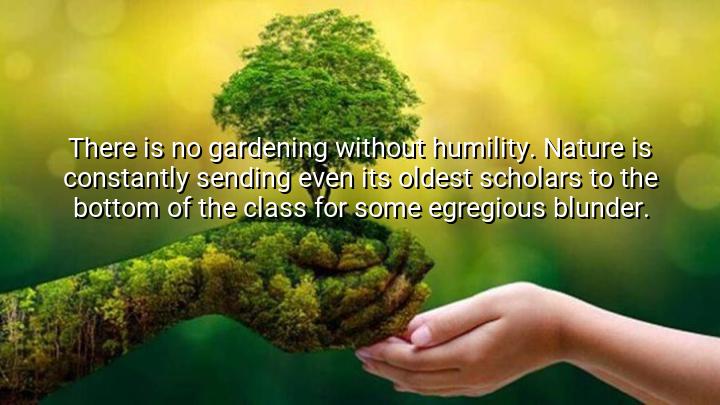




Alfred Austin’s quote emphasizes the humbling nature of gardening and the inherent challenges it presents. By stating, "There is no gardening without humility," Austin suggests that no matter how experienced a gardener becomes, there will always be setbacks, mistakes, or unforeseen difficulties. Gardening requires a certain level of modesty because nature does not always follow the plans or expectations of the gardener, reminding them that they are not in complete control.
The second part of the quote, "Nature is constantly sending even its oldest scholars to the bottom of the class for some egregious blunder," further highlights the unpredictability of nature. It suggests that even the most seasoned gardeners—those who have learned from years of experience—will face failures or unexpected challenges. The idea of being sent "to the bottom of the class" emphasizes the idea of learning from mistakes and the necessity of accepting failure as part of the process.
Austin’s words also reflect the cyclical and uncontrollable aspects of nature. No matter how much knowledge one accumulates, nature remains unpredictable and often teaches lessons through failure. These moments of blunder remind gardeners of their limitations and the need for continuous learning, adapting to nature’s whims.
The origin of this quote likely stems from Austin’s personal experience as both a gardener and a poet, where he would have gained insight into the humbling process of working with nature. As a poet who appreciated the beauty and intricacy of the natural world, Austin’s reflections on gardening show a deep respect for the process of growth and the lessons it teaches. His statement encourages a mindset of receptivity and growth, both in gardening and in life.

AAdministratorAdministrator
Welcome, honored guests. Please leave a comment, we will respond soon