

There are two freedoms - the false, where a man is free to do what he likes; the true, where he is free to do what he ought.
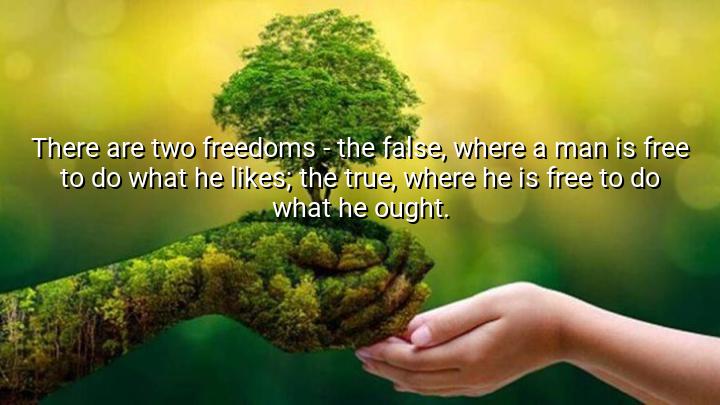




The quote "There are two freedoms - the false, where a man is free to do what he likes; the true, where he is free to do what he ought" by Charles Kingsley distinguishes between two different concepts of freedom. The first type, which Kingsley refers to as "false freedom," suggests a freedom defined by the ability to act without constraints, doing whatever one desires, regardless of moral or societal implications. This view of freedom is essentially about indulgence and personal pleasure without responsibility or consideration for the consequences.
In contrast, Kingsley contrasts this with "true freedom," which he defines as the ability to do what one ought—meaning what is right, virtuous, and just. True freedom, according to Kingsley, involves living according to moral principles and a sense of responsibility, where individual freedom is balanced with a commitment to the greater good. In this sense, true freedom is not just about personal liberty but about making choices that reflect ethical and responsible behavior.
The origin of this quote comes from Kingsley’s broader views on moral and spiritual freedom. As a writer and theologian, Kingsley often explored the tension between personal desires and the ethical responsibilities individuals have to society. This quote encapsulates his belief that freedom should be linked to duty and responsibility, rather than merely acting on one’s impulses. For Kingsley, true liberation comes from the alignment of one’s actions with what is morally right and just, not simply what feels good in the moment.
Ultimately, Kingsley's quote serves as a reminder that freedom should be viewed not only in terms of personal autonomy but in relation to the ethical duties we have toward others and society. True freedom, in his view, is about the liberty to act in accordance with one's moral duties, while false freedom is a self-serving pursuit of desire without regard for the consequences. This deeper understanding of freedom emphasizes responsibility alongside autonomy, guiding individuals to make choices that are not only free but also just and beneficial for society.

AAdministratorAdministrator
Welcome, honored guests. Please leave a comment, we will respond soon