

The thirst for liberation and equality can never come at the expense of dehumanizing other marginalized groups - especially at a time when hate crimes against Jews have increased significantly.
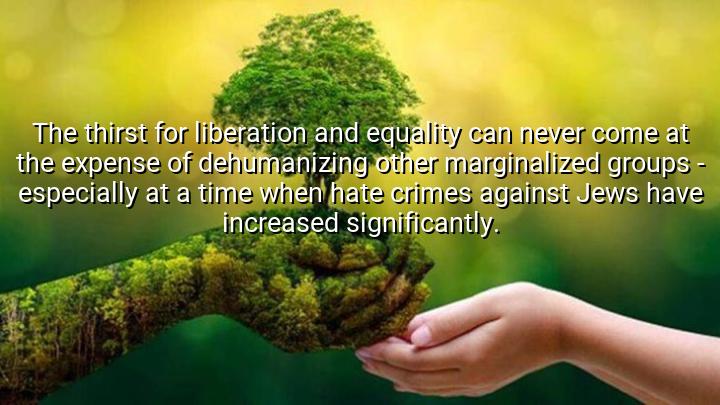




The quote by Jemele Hill, an American journalist and cultural critic, stresses the principle that the pursuit of liberation and equality must not undermine the dignity or safety of other marginalized groups. Hill warns against the tendency of some movements to inadvertently—or deliberately—fuel prejudice against others, particularly in times of heightened social tension. By highlighting the rise in hate crimes against Jews, she reminds her audience that true equality cannot be built on the dehumanization of another vulnerable community.
The origin of this statement comes from Hill’s long-standing engagement with issues of race, justice, and civil rights in America. As a prominent voice on sports, culture, and politics, she often comments on the intersections of activism and social movements. This quote reflects her recognition of a troubling reality: while many groups fight for their own rights, it is essential that they do not perpetuate harmful stereotypes or violence against others, particularly during a documented rise in antisemitism.
The meaning of the quote lies in its universal call for solidarity. Hill argues that genuine liberation and equality are inseparable from the protection of all marginalized groups. If one group advances by diminishing another, the broader struggle for justice loses its moral authority. Instead, the fight for equity must be inclusive, acknowledging that multiple communities face discrimination and require mutual support.
In summary, Jemele Hill’s words remind us that the fight for justice cannot be selective. Her statement underscores the need for movements to resist dividing marginalized groups against one another and instead unite against systemic oppression in all its forms. By pointing to the rise in hate crimes against Jews, Hill highlights the urgent responsibility to ensure that calls for liberation and equality are grounded in compassion, solidarity, and universal human dignity.

AAdministratorAdministrator
Welcome, honored guests. Please leave a comment, we will respond soon