

The stupid neither forgive nor forget; the naive forgive and forget; the wise forgive but do not forget.
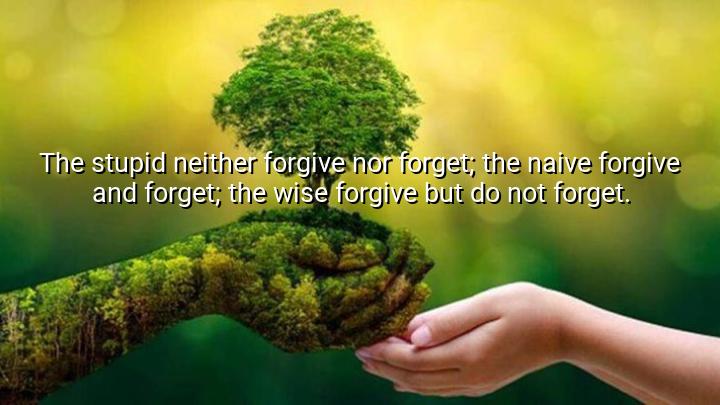




The quote "The stupid neither forgive nor forget; the naive forgive and forget; the wise forgive but do not forget" by Thomas Szasz explores different ways people approach the concepts of forgiveness and memory. Szasz divides human reactions into three categories: the stupid, the naive, and the wise. According to him, the stupid are unable to forgive or forget, meaning they are often consumed by resentment and unable to move past offenses. This can lead to a constant state of bitterness and emotional paralysis.
On the other hand, the naive are characterized by their tendency to forgive quickly and forget easily, often without fully processing or understanding the impact of the offense. While this may seem like a compassionate or virtuous trait, it can also lead to complacency or the failure to learn from past mistakes. For the naive, forgiveness may be more about avoiding conflict than engaging in real emotional growth or reconciliation.
In contrast, Szasz suggests that the wise approach forgiveness differently: they are able to forgive but choose not to forget. This means that while they may let go of resentment and bitterness, they still remember the lesson learned from the experience. Forgiveness, in this context, is not about erasing the past but about accepting it and using that understanding to protect themselves and grow wiser in the future. The wise understand that holding onto memory allows them to navigate future interactions with more awareness.
The origin of this quote lies in Szasz's work as a psychiatrist and psychoanalyst. Known for his critical stance on the medicalization of mental health, Szasz often explored the relationship between human behavior, emotions, and psychological well-being. This quote reflects his broader philosophy on the complexities of human emotion, personal responsibility, and the psychological nuances of forgiveness. In essence, Szasz’s quote teaches that true forgiveness involves both emotional maturity and self-awareness, where letting go does not equate to forgetting or excusing harmful actions.

AAdministratorAdministrator
Welcome, honored guests. Please leave a comment, we will respond soon