

The narrative in 2020 must speak about gender equality which will only come from empowering the women who've been given the short end of the stick for far too long.
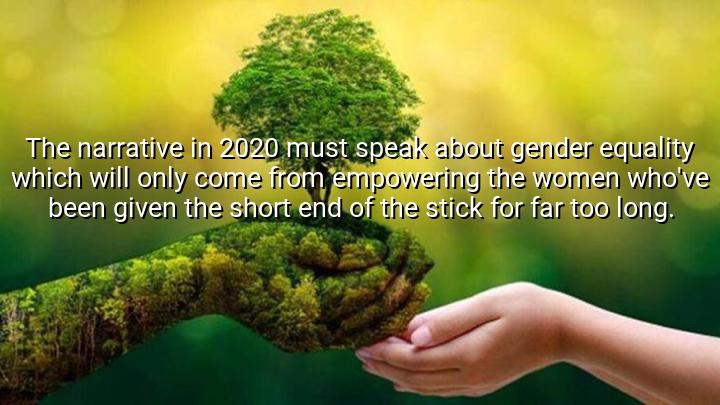




The quote by Richa Chadha highlights the urgent need for the narrative in 2020—and beyond—to center on gender equality. She stresses that real progress will only come through empowering women, particularly those who have historically been marginalized and disadvantaged. By using the phrase “short end of the stick,” she refers to the systemic inequalities, discrimination, and limited opportunities that women have faced for generations.
The origin of this quote comes from Chadha’s advocacy as both an acclaimed Indian actress and a vocal supporter of women’s rights and social justice. Known for choosing unconventional roles and speaking out on pressing issues, she has used her platform to push conversations about equality in the entertainment industry and in society at large. Her statement reflects a broader cultural shift happening in the late 2010s and early 2020s, where movements like #MeToo sparked global discussions on empowerment and accountability.
This quote also underscores the importance of reshaping public discourse. By calling for a “narrative” that prioritizes gender equality, Chadha highlights that change is not just about policies or opportunities, but also about changing the way society talks about and perceives women. Empowering marginalized women means actively challenging stereotypes, breaking barriers, and creating inclusive spaces where women’s voices are valued.
Ultimately, Chadha’s message is both a critique and a call to action. It acknowledges the long history of inequality while insisting that the future must be written differently—one where empowerment is central and where women are no longer denied opportunities. Her words inspire society to not just recognize the imbalance, but to actively work toward correcting it.

AAdministratorAdministrator
Welcome, honored guests. Please leave a comment, we will respond soon