

The main purpose of engaging in conversation can no longer be personal advancement or respectability. Instead, I'd like for us to use conversations to create equality, to open ourselves to strangers, and, most practically, to remake our working world.
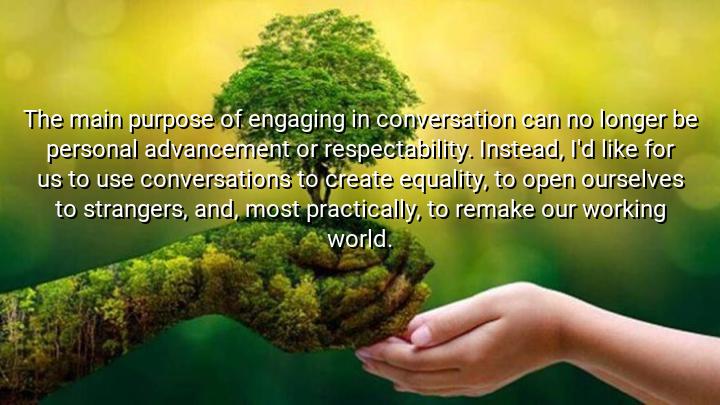




Theodore Zeldin’s statement, “The main purpose of engaging in conversation can no longer be personal advancement or respectability,” challenges the conventional view of dialogue as a tool for networking or self-promotion. By dismissing personal advancement and respectability as outdated goals, he argues that conversation should serve a higher social function. For Zeldin, the real value of speaking with others lies not in self-interest but in building bridges between people.
He continues, “Instead, I'd like for us to use conversations to create equality, to open ourselves to strangers, and, most practically, to remake our working world.” Here, Zeldin reframes conversation as a transformative act. It becomes a way to foster equality, break down barriers with strangers, and reimagine the culture of the working world. His vision moves dialogue away from superficial exchange and toward a force that reshapes both personal and professional relationships.
The origin of this quote lies in Zeldin’s work as a historian and philosopher, particularly his explorations of human interaction and empathy. Known for books such as Conversation: How Talk Can Change Our Lives, Zeldin has long argued that meaningful dialogue can alter how societies function. His emphasis on conversation reflects his belief that human progress is not just political or technological but deeply rooted in how we connect with one another.
At its heart, the quote is both idealistic and practical. Zeldin sees conversation as a quiet revolution, capable of challenging hierarchies and softening divisions. By shifting its purpose from self-promotion to shared understanding, he suggests that we can build a more equal, humane, and collaborative world—starting with the simple act of talking differently.
Would you like me to also connect this to Zeldin’s broader theme that everyday exchanges, rather than grand speeches or politics, are what truly shape the fabric of society?

AAdministratorAdministrator
Welcome, honored guests. Please leave a comment, we will respond soon