

The harvest of old age is the recollection and abundance of blessing previously secured.
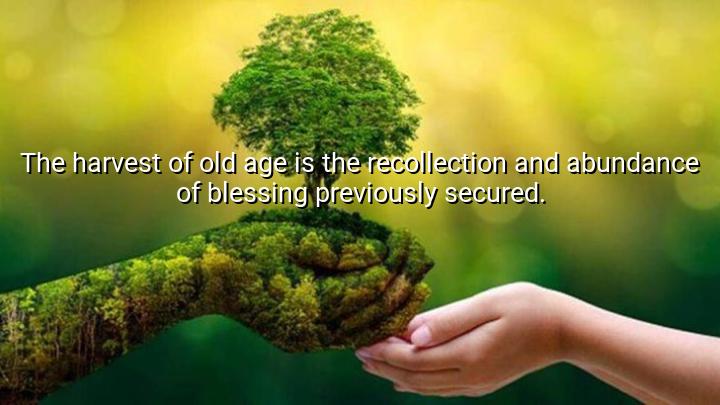




In this quote, Marcus Tullius Cicero reflects on the value of old age and its connection to a life well-lived. He uses the metaphor of a harvest, suggesting that the later years of life are a time to reflect on the blessings one has accumulated over a lifetime. Just as a farmer reaps the rewards of their labor during harvest season, a person in their old age reaps the benefits of the experiences, wisdom, and achievements they've gathered throughout their life.
Cicero emphasizes that old age is not simply a time of decline but a phase of life filled with the rewards of a well-spent past. The recollection of these blessings offers a sense of fulfillment and contentment, as individuals can look back on their accomplishments and relationships with gratitude. This perspective transforms the aging process into an opportunity to appreciate the richness of one’s journey rather than focusing on its inevitable end.
The quote also speaks to the importance of building a meaningful life early on, as the abundance of blessings in old age is a reflection of the efforts and choices made in youth and middle age. It suggests that by living a life filled with purpose, kindness, and wisdom, individuals can enjoy the fruits of their labor when they grow older. Cicero's words remind us to focus on accumulating blessings that will bring lasting joy and fulfillment.
In essence, Cicero is advocating for a life of purpose and intention, where the later years are a time of gratitude, not regret. The harvest of old age is not measured by material wealth, but by the relationships, achievements, and inner peace one has cultivated over the years. This view encourages people to cherish every phase of life, knowing that the benefits of a good life will be felt in its later stages.

GTPhat giau ten
The idea here really resonates with me, especially in an era where youth is so idolized. It reminds us that old age can be rich, not just in memory, but in a sense of earned wisdom. But I do question whether this applies universally—does everyone have access to this kind of fulfillment, or is it a luxury reserved for those who lived more secure, privileged lives?
NNKhanh Ngoc Nguyen
There’s something beautifully poetic about the metaphor of a harvest. It implies effort, patience, and time. I wonder, though, how much of that harvest is about external achievements versus internal growth. Is the ‘abundance of blessing’ material success, or is it more about memories, love, and lessons learned? This quote opens a profound discussion about what we truly value in life’s final chapters.
TNNguyen Ngoc Thao Nhi
I find this quote incredibly hopeful. It frames old age not as decline, but as a time of fulfillment and reflection. However, it also places a kind of pressure on earlier life—to gather enough 'blessing' to sustain the later years. What if someone didn’t have the chance to build that abundance? Can wisdom, kindness, or peace later in life still create a meaningful harvest?
HMNguyen Hoang Minh
Cicero’s words made me pause and think: are we consciously cultivating our lives with the long game in mind? In a world that values instant gratification, it’s rare to consider what we’ll look back on decades from now. Do we reflect enough on what we’re currently ‘securing’? Or are we too caught up in daily routines to notice what seeds we’re planting for our future selves?
Bbubu
This quote feels deeply reflective. It suggests that what we invest in during our youth—relationships, values, and experiences—ultimately shapes the quality of our later years. But what about those who, through no fault of their own, didn’t get to ‘secure blessings’? Does this imply their old age is somehow lesser? I wonder how much agency we truly have in crafting a ‘harvest’ and what defines a blessing in this context.