

Science is the knowledge of consequences, and dependence of one fact upon another.
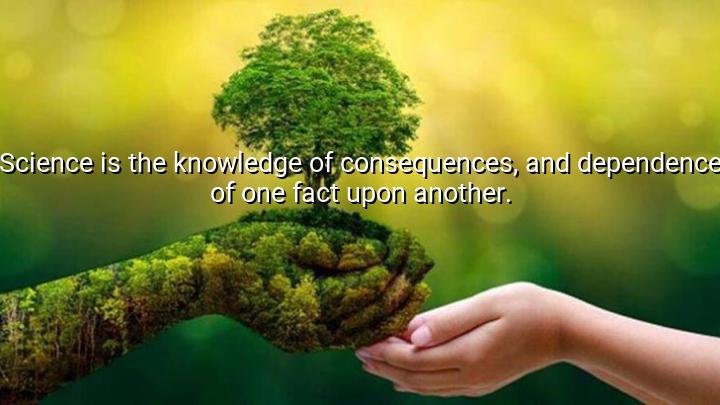




The quote by Thomas Hobbes defines science as the systematic understanding of consequences and the relationships between facts. Hobbes emphasizes that knowledge is not merely the accumulation of isolated information, but the comprehension of how one fact depends on another. This approach highlights the logical and interconnected nature of scientific inquiry, where understanding cause and effect is central to meaningful learning.
Hobbes underscores the importance of analyzing relationships and patterns in the natural world. By studying how facts influence each other, one can predict outcomes, draw reliable conclusions, and apply knowledge practically. This perspective positions science as a disciplined method for interpreting the world rather than a collection of random observations.
The quote also suggests that true understanding requires attention to the consequences of actions and phenomena. Recognizing these connections allows individuals to think critically, make informed decisions, and anticipate results in both natural and social contexts. Science, in Hobbes’ view, is a tool for rationality and foresight.
Originating from Thomas Hobbes, a 17th-century English philosopher known for his work in political philosophy and epistemology, the quote reflects his analytical approach to knowledge and reasoning. Hobbes’ insight emphasizes that science is a structured method for linking facts and understanding their interdependence, forming the basis for rational thought and practical application.

AAdministratorAdministrator
Welcome, honored guests. Please leave a comment, we will respond soon