

Satisfaction consists in freedom from pain, which is the positive element of life.
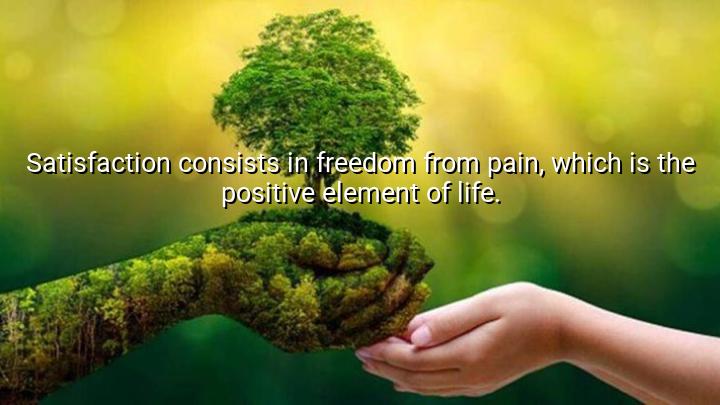




In this quote, Arthur Schopenhauer suggests that satisfaction is achieved when we are free from pain. According to Schopenhauer, pain, in its many forms—whether physical, emotional, or psychological—creates suffering that detracts from a sense of contentment and well-being. By removing or alleviating pain, we create space for positive elements of life, such as joy, peace, and fulfillment. Schopenhauer argues that satisfaction is not about the presence of pleasure or desire but rather the absence of suffering.
Schopenhauer's view of satisfaction aligns with his broader philosophy of pessimism. He believed that human life is inherently filled with suffering, and that much of what people chase—whether it be wealth, power, or pleasure—is often futile and does not lead to lasting contentment. For him, true satisfaction is not found in the attainment of desires, but in the relief from the pain and distress that accompany life's struggles. The removal of pain, therefore, becomes the foundation for what he views as the "positive" element of life.
The quote also reflects Schopenhauer's belief in renunciation and the importance of reducing unnecessary desires. In his philosophy, the pursuit of desires and material goods often leads to more suffering because they create new wants and frustrations. By freeing ourselves from these desires, we can reduce the pain they cause and, in doing so, achieve a more peaceful state of mind. Satisfaction, for Schopenhauer, is found in the absence of this constant striving.
Ultimately, Schopenhauer's perspective on satisfaction is more about absence than presence. It suggests that contentment comes from freeing oneself from the negative aspects of life—chiefly, pain—and focusing on what remains when suffering is removed. This concept challenges the typical view of happiness and satisfaction, offering a more minimalist approach to finding peace.

AAdministratorAdministrator
Welcome, honored guests. Please leave a comment, we will respond soon