

Religion survives because it answers three questions that every reflective person must ask. Who am I? Why am I here? How then shall I live?
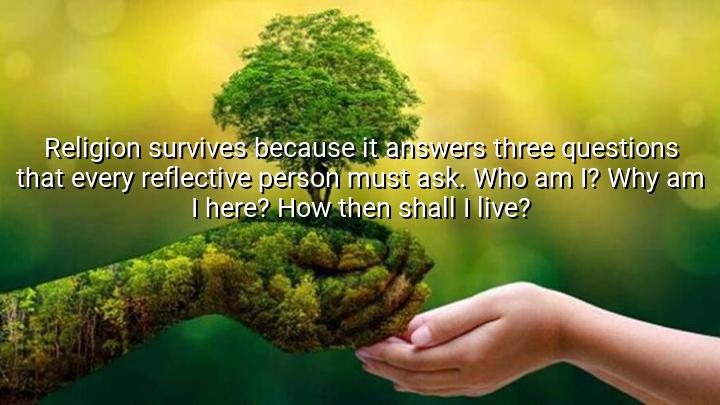




The quote by Jonathan Sacks speaks to the profound role that religion plays in addressing essential human questions. The three questions he references are not just theoretical—they are the very questions that shape human existence. "Who am I?" speaks to our quest for identity, our understanding of self and our place in the world. This question is deeply rooted in the search for meaning, and religion often provides a framework for individuals to understand themselves in relation to something greater, be it the divine, nature, or the collective human experience.
The second question, "Why am I here?", delves into the purpose of life. Every reflective person grapples with this, as it touches on issues of existence and meaning. Without a sense of purpose, life can feel aimless or detached. Religious teachings frequently offer answers to this—whether through fulfilling a divine plan, living according to moral principles, or striving for a higher spiritual connection. It gives people a sense of direction and fulfillment, providing a reason to move forward even in challenging times.
Lastly, "How then shall I live?" is about the moral and ethical framework that guides our actions. Religion often prescribes a way of life, offering principles on how to treat others, the environment, and oneself. These teachings give individuals a guide for making decisions and understanding what constitutes a meaningful life. In this way, religion doesn't just answer the questions of identity and purpose, but it also offers practical wisdom for navigating the complexities of daily existence.
Ultimately, Sacks emphasizes that these fundamental questions of identity, purpose, and moral direction are core to the human experience, and religion survives because it provides answers that are both universal and deeply personal.

AAdministratorAdministrator
Welcome, honored guests. Please leave a comment, we will respond soon