

One must realise his Self in order to open the store of unalloyed happiness.
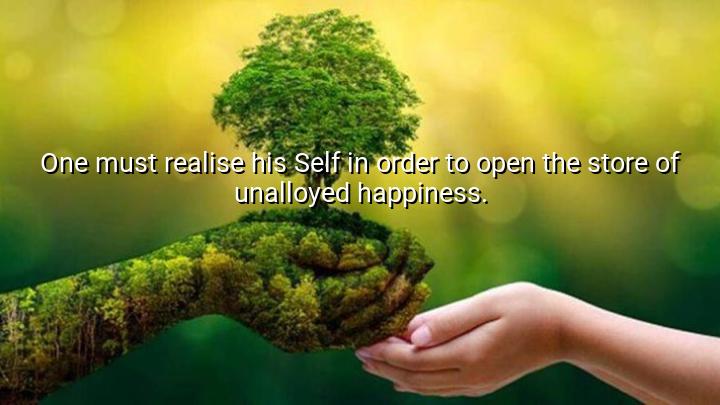




Ramana Maharshi’s quote, "One must realise his Self in order to open the store of unalloyed happiness," reflects a central teaching in his philosophy of self-realization. Maharshi suggests that true happiness cannot be found through external sources or material accomplishments but arises from understanding and connecting with one’s Self—a deeper, more authentic sense of identity beyond the ego. To unlock happiness, a person must look inward and realize their true nature, which transcends the superficial aspects of the self.
The use of the term "unalloyed" is significant because it indicates a pure, undiluted form of happiness, free from the distractions and impermanence of worldly desires. Self-realization, in Maharshi's teachings, involves the removal of the false layers of identity that are shaped by external circumstances and ego-driven desires. Once these layers are shed, a person can access a deep, enduring form of happiness that is not dependent on external factors or temporary pleasures.
Maharshi’s emphasis on realizing the Self points to a process of spiritual awakening, where an individual comes to understand their true essence—often described as pure consciousness or the Atman. According to his teachings, this realization brings lasting peace and joy because it connects the individual with their divine nature, which is inherently free from suffering and fear.
The origin of this quote comes from the teachings of Ramana Maharshi, an influential Indian spiritual teacher. Maharshi is known for his teachings on self-inquiry (Atma Vichara) and the method of asking "Who am I?" to discover one's true nature. His philosophy centers on the idea that the realization of one's Self is the key to spiritual liberation and the attainment of happiness. This quote encapsulates his belief that inner peace and true fulfillment come from self-awareness and spiritual enlightenment.

AAdministratorAdministrator
Welcome, honored guests. Please leave a comment, we will respond soon