

Once you do away with the idea of people as fixed, static entities, then you see that people can change, and there is hope.
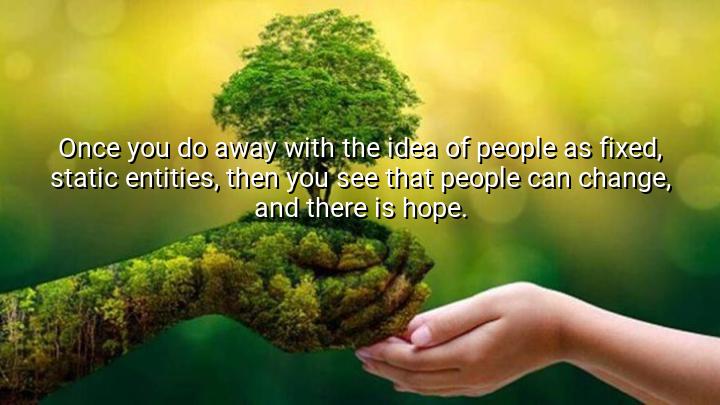




The quote "Once you do away with the idea of people as fixed, static entities, then you see that people can change, and there is hope." by bell hooks challenges the common perception of human nature as unchanging. hooks argues that viewing people as dynamic and capable of growth opens the door to transformation and hope. This perspective encourages embracing the possibility that individuals can evolve through learning, experience, and self-reflection, which is essential for personal and social progress.
bell hooks, a renowned feminist scholar and cultural critic, often explores themes of identity, liberation, and social justice. Her quote reflects her belief in the potential for change within everyone, rejecting rigid labels or fixed identities that limit understanding. By advocating for a view of people as fluid and evolving, hooks promotes compassion, forgiveness, and the possibility of renewal both individually and collectively.
The origin of this quote is rooted in hooks’s broader body of work on transformative education and social change. She emphasizes that hope emerges from recognizing human adaptability, which is vital in movements for equity and justice where transformation is necessary.
In summary, bell hooks’s quote inspires a more flexible and hopeful view of humanity. It encourages us to believe in the capacity for change, suggesting that such belief is fundamental to creating a better, more just world.

AAdministratorAdministrator
Welcome, honored guests. Please leave a comment, we will respond soon