

Old age may have its limitations and challenges, but in spite of them, our latter years can be some of the most rewarding and fulfilling of our lives.
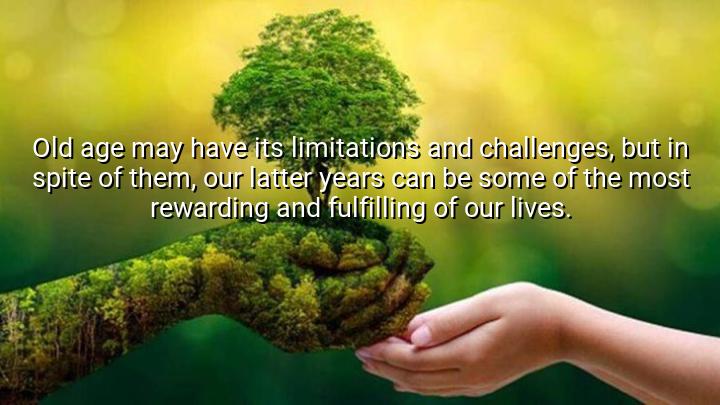




The quote, "Old age may have its limitations and challenges, but in spite of them, our latter years can be some of the most rewarding and fulfilling of our lives," comes from Billy Graham, the renowned American Christian evangelist. In this statement, Graham offers an optimistic perspective on aging, acknowledging that old age comes with its own set of limitations and challenges, such as physical decline or health issues. However, he emphasizes that despite these difficulties, the later stages of life can still offer profound rewards and fulfillment.
Graham’s use of the word "limitations" speaks to the inevitable physical and mental changes that come with aging, while "challenges" points to the emotional and social difficulties that often accompany the later years. Yet, he does not dwell on the negative aspects of aging but instead shifts the focus to the potential for growth, peace, and satisfaction that can emerge as one reflects on a lifetime of experiences. His message encourages people to embrace the positive aspects of aging, which may include more time for reflection, relationships, and personal achievement.
By saying "our latter years can be some of the most rewarding and fulfilling", Graham highlights that old age can offer opportunities for wisdom, inner peace, and the enjoyment of life’s simple pleasures. The later years of life may provide time to reconnect with loved ones, pursue long-held passions, and enjoy the fruits of a lifetime of labor. For Graham, the key to fulfillment in later life lies in embracing the potential for spiritual and emotional growth that can accompany aging.
Ultimately, Graham’s quote is a hopeful reminder that aging does not necessarily mean a loss of purpose or joy. While it may come with its share of challenges, old age can also be a time of profound gratitude, reflection, and contentment. His perspective encourages individuals to find meaning and value in the later years of life, focusing on the positives rather than the difficulties of aging.

DLNguyen Dieu Linh
This quote challenges the fear of aging by highlighting its potential rewards. It raises an important question: how can we personally prepare for a fulfilling old age? Should there be more focus on lifelong learning, health maintenance, or spiritual growth? It’d be interesting to hear diverse perspectives on what makes later life meaningful across different cultures.
DTDuong Nguyen Doan Trang
Billy Graham’s words prompt reflection on how aging can be a time of wisdom, reflection, and personal growth. But I’m curious about the role of community and relationships in making those years fulfilling. How important is social connection compared to individual achievements? What initiatives exist to combat loneliness among seniors and enhance their well-being?
HNHuynh Nguyen
This statement resonates with me, especially the idea that age brings unique rewards. I’d like to explore how cultural attitudes shape the experience of aging. In societies that value elders more, do people report greater satisfaction in their later years? What lessons can younger generations learn from the elderly to enrich their own lives?
KNkim ngan
I appreciate the positive tone here, which counters common stereotypes about aging being solely about decline. However, I wonder if this view might overlook the real difficulties many face in old age. How can we balance acknowledging challenges while still promoting a message of hope and fulfillment? Are there ways to better support older adults to make those fulfilling years more accessible?
ALHuynh Nguyen Anh Lam
This quote offers a hopeful and inspiring perspective on aging, reminding us that fulfillment doesn’t end with youth. It makes me curious about what specific experiences or activities people find most rewarding in their later years. How much does mindset versus physical health influence the quality of those years? Can society do more to create opportunities for older adults to continue growing and contributing meaningfully?