

Old age has its pleasures, which, though different, are not less than the pleasures of youth.
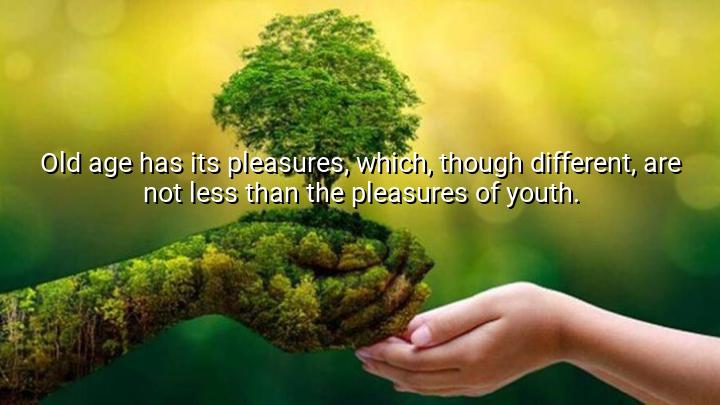




In this quote, W. Somerset Maugham, an English writer, reflects on the notion that old age comes with its own set of pleasures, which, while different from those experienced in youth, are still valuable and fulfilling. Maugham suggests that aging does not necessarily mean the loss of enjoyment or satisfaction in life, but rather that the nature of pleasure changes as we grow older. This idea encourages a shift in perspective, emphasizing that older individuals can still find joy and contentment, albeit in different forms than in their younger years.
Maugham’s statement highlights the concept that old age brings different kinds of experiences, often centered around wisdom, reflection, and a deeper understanding of life. While youth may be characterized by physical vigor, novelty, and adventure, old age can offer the pleasures of tranquility, memories, and personal growth. Maugham is advocating for the idea that pleasure is not solely defined by external achievements or youthful energy, but can be found in the acceptance and embrace of the changes that come with age.
The origin of this quote lies in Maugham’s exploration of human nature and the passage of time. As an author, Maugham often delved into the complexities of human emotions, relationships, and aging. His works reflect a deep understanding of how people cope with life stages and the inevitable passage of time, making this quote a natural extension of his broader themes of personal experience and introspection.
Ultimately, Maugham’s words offer a reminder that old age can still be a time of fulfillment and pleasure, even if those pleasures are different from the ones experienced in youth. The quote encourages us to find joy in the unique experiences that come with getting older and to appreciate the value of the life lived, rather than focusing solely on the vigor of youth.

KAnguyen thi kim anh
What a refreshing and optimistic take on aging. It’s not saying youth isn’t joyful—it’s saying joy just looks different with time. I’d love to hear more voices share what their personal 'pleasures of age' are. Would more people feel less afraid of getting older if we talked more openly about the things age can bring instead of just what it takes away?
NBNgoc Bich
This statement prompts me to reflect on how joy evolves. Are we conditioned to chase only the intense highs of youth while overlooking the subtle, enduring pleasures that emerge later in life? Things like meaningful conversations, contentment, or the ability to mentor others. Perhaps we need to broaden our definition of pleasure to fully appreciate the richness of life across all ages.
LALan Anh
As someone who’s starting to feel the years a bit more, I find this quote oddly comforting. It feels like permission to let go of youthful expectations and embrace a new kind of joy—one rooted in depth rather than excitement. But I wonder: how do we cultivate this mindset in a culture that often resists aging and associates it with irrelevance or decline?
PTHuyen Pham Thanh
This resonates deeply. There's a quiet dignity in accepting that every life stage has its own value. Too often society glorifies youth and dismisses old age as decline. But isn't there something beautiful in the slower pace, the freedom from pressure, the ability to reflect? Maybe we should be asking what our culture is missing by not valuing the richness that comes with age.
NTVan Dung Nguyen Thi
I appreciate how this quote challenges the assumption that youth is the only time worth celebrating. It invites us to look at aging not as a loss but as a transformation of joy. What are the unique pleasures that only come with age—wisdom, patience, perspective? This quote makes me wonder if we’re doing enough culturally to highlight and honor those joys instead of mourning what’s gone.