

Now, I have always believed that women are not victims; we are agents of change, we are drivers of progress, we are makers of peace - all we need is a fighting chance.
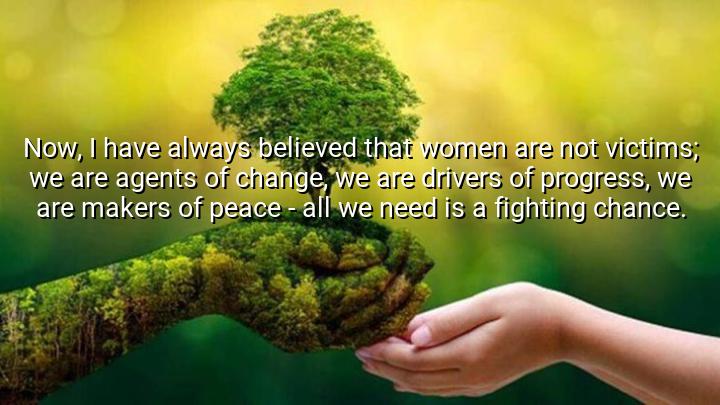




The quote “Now, I have always believed that women are not victims; we are agents of change, we are drivers of progress, we are makers of peace — all we need is a fighting chance.” by Hillary Clinton is a powerful declaration of female empowerment, emphasizing women's active role in shaping societies rather than being passive subjects of circumstance. Clinton, a former U.S. Secretary of State, Senator, and presidential candidate, has long been a vocal advocate for gender equality and women’s rights on both domestic and global stages. This quote captures her core belief that women possess the strength and capacity to lead, transform, and build — they simply need equitable opportunities to do so.
By rejecting the label of victims, Clinton reframes the narrative surrounding women, especially those marginalized by social, economic, or political structures. She instead presents women as proactive forces capable of driving meaningful change. Phrases like “agents of change” and “makers of peace” elevate women’s traditional and emerging roles in governance, community leadership, and conflict resolution, areas where their contributions have often been undervalued or overlooked.
The phrase “all we need is a fighting chance” is particularly resonant—it acknowledges the systemic barriers women face but insists that given fair access, women will excel and uplift others. Clinton’s experience in politics and diplomacy has brought her face to face with countless examples of women transforming their communities when provided with education, resources, and support. The quote encourages societies to invest in women, not out of charity, but because of their proven ability to effect lasting progress.
Ultimately, this quote is both an inspirational message and a political challenge. Clinton calls on global institutions and individuals alike to stop undermining or underestimating women, and instead to create pathways for their full participation and leadership. Her words reinforce the idea that equality is not just a moral imperative—it is a strategic necessity for achieving peace, development, and justice in the world.

AAdministratorAdministrator
Welcome, honored guests. Please leave a comment, we will respond soon