

None who have always been free can understand the terrible fascinating power of the hope of freedom to those who are not free.
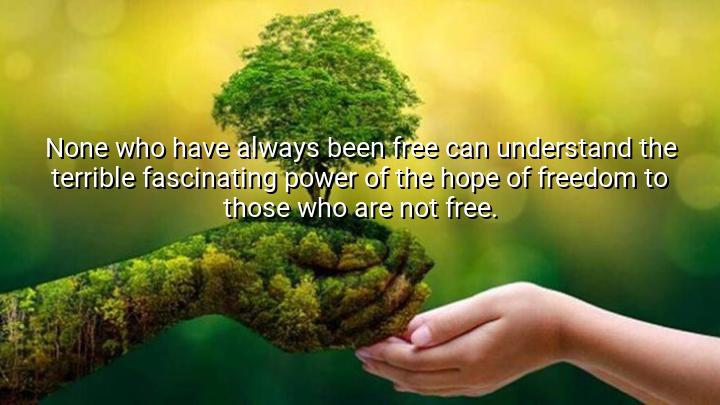




Pearl S. Buck’s quote, "None who have always been free can understand the terrible fascinating power of the hope of freedom to those who are not free," highlights the profound and transformative value of freedom for those who have never experienced it. Buck suggests that for individuals who have lived in freedom throughout their lives, it can be difficult to fully comprehend how essential and powerful the desire for freedom can be for those who are oppressed or denied it. The quote draws attention to the emotional and psychological impact of freedom as something that is not just a right but a desperate hope for those who have been deprived of it.
The use of the words "terrible fascinating power" emphasizes the intensity of this yearning. For those without freedom, the hope of achieving it becomes almost all-consuming. This hope can be a driving force, motivating people to endure hardship, make sacrifices, and even risk their lives. Buck implies that the longing for freedom can be so powerful that it becomes a defining force in an individual’s life, shaping their actions, decisions, and sense of self.
Buck’s quote also reflects the inherent inequality between those who live freely and those who do not. While those who are free may take it for granted, the oppressed view it as something elusive and precious. The hope for freedom gives them a sense of purpose and direction—even if it remains out of reach. This difference in perspective underscores the significance of freedom and how it shapes the lives of those who are deprived of it.
Ultimately, Buck’s quote underscores the deep emotional connection people have to freedom, especially when they are denied it. The yearning for freedom is portrayed as a driving force for those who have never experienced it, illustrating its central importance in the human condition. It serves as a reminder of the privilege of living freely and the powerful hope that drives those struggling for their own liberty.

AAdministratorAdministrator
Welcome, honored guests. Please leave a comment, we will respond soon