

No one will understand a Japanese garden until you've walked through one, and you hear the crunch underfoot, and you smell it, and you experience it over time. Now there's no photograph or any movie that can give you that experience.
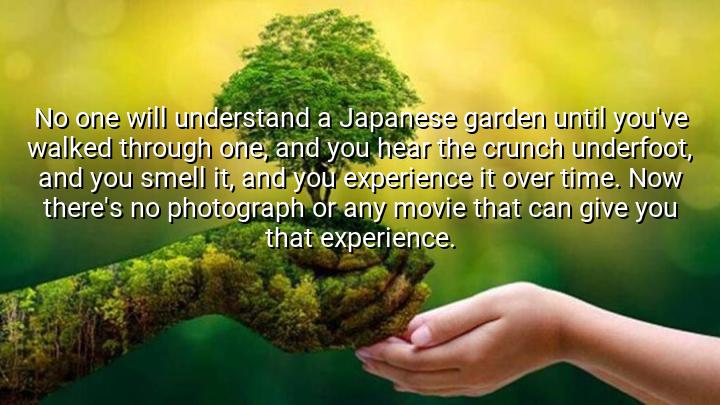




The quote by J. Carter Brown, "No one will understand a Japanese garden until you've walked through one, and you hear the crunch underfoot, and you smell it, and you experience it over time. Now there's no photograph or any movie that can give you that experience," emphasizes the deeply sensory and immersive experience of visiting a Japanese garden. Brown suggests that understanding the essence of a garden, especially one as intricate and intentional as a Japanese garden, goes beyond visual representation. It requires engaging with all of the senses—hearing, smelling, and feeling the environment in a way that cannot be captured in a photograph or film.
The quote highlights the unique and dynamic qualities of a Japanese garden, which is designed not only for its visual beauty but for a deeper spiritual and sensory connection. Walking through the garden allows one to experience its textures, sounds, and scents, which change with the time of day, the seasons, and the passage of time. This experience involves being fully present and engaged in the environment, where the act of walking through the garden becomes a meditative experience rather than a mere visual observation.
Brown’s statement also suggests the limitations of media in conveying true, lived experiences. While photographs or films can offer a glimpse of what a garden looks like, they cannot replicate the physical presence and emotional impact of walking through it. The sensory elements—the crunch underfoot, the scent of the plants, and the sense of calm and reflection that comes over time—are aspects of the garden that only become fully understood when experienced firsthand.
The origin of this quote is rooted in J. Carter Brown’s role as a museum director and his appreciation for art and cultural experiences. Known for his work with the National Gallery of Art in Washington, D.C., Brown had a deep appreciation for the value of direct experience with art and nature. His quote about the Japanese garden speaks to a broader belief in the importance of experiencing art and nature in person, as opposed to only viewing it through media. This aligns with the idea that true understanding and appreciation of certain experiences can only come from firsthand engagement.

AAdministratorAdministrator
Welcome, honored guests. Please leave a comment, we will respond soon