

No occupation is so delightful to me as the culture of the earth, and no culture comparable to that of the garden.
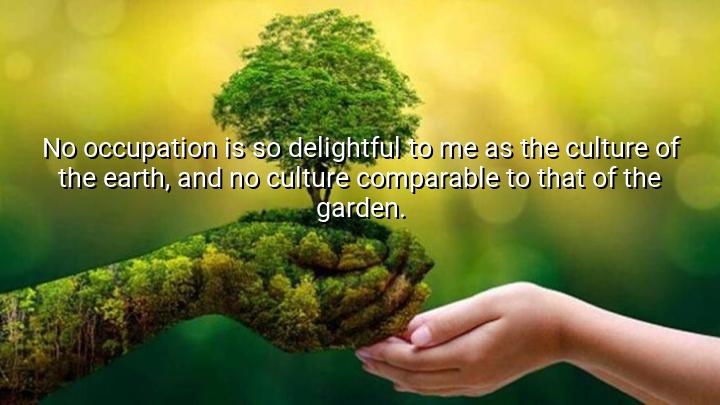




In this quote, Thomas Jefferson expresses his deep admiration for the culture of the earth, specifically the act of cultivating a garden. He states that no occupation brings him as much joy as working with the land and tending to a garden. The word culture here is used in two senses: the cultivation of land and the personal enrichment that comes from interacting with nature. Jefferson suggests that the process of growing plants, nurturing life, and engaging with the rhythms of nature holds unparalleled value.
Jefferson’s statement also reflects his belief in the importance of a close connection to the land and the natural world. The garden, as a space where humans can actively shape and interact with nature, is presented as the pinnacle of cultural activity. In his time, Jefferson believed that the act of cultivating the land was not just practical but spiritually fulfilling and intellectually enriching. It fostered virtues like patience, attention, and respect for the cycles of life.
The origin of this quote can be found in Jefferson's personal philosophy and lifestyle. As an avid gardener, Jefferson took great pleasure in the gardens at Monticello, his estate in Virginia. His love for gardening went beyond just growing food—it was a practice that connected him to nature and provided him with peace and reflection. This quote reflects his belief that being in tune with the earth was one of the highest forms of engagement a person could have.
Ultimately, Jefferson’s quote underscores the idea that working with the earth and cultivating a garden is not only a practical activity but a deeply fulfilling one that can enrich the mind and spirit. For Jefferson, the garden was a place where both physical and intellectual growth could flourish, making it the ultimate form of culture in his eyes.

AAdministratorAdministrator
Welcome, honored guests. Please leave a comment, we will respond soon