

My mother, brave woman, lost her whole family when she decided to marry a black man in the '60s. When the marriage fell apart, she had to come back to her family.
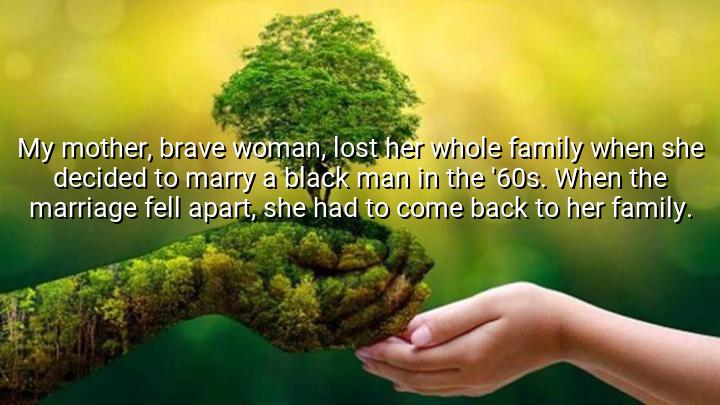




Lisa Bonet’s quote reflects on the challenges and personal sacrifice her mother endured in the face of racial prejudice during the 1960s. By marrying a black man during a time when racial tensions were high and interracial marriages were still highly stigmatized, Bonet’s mother faced severe social and family rejection. The quote also reveals the emotional toll of her mother’s experience, as she not only lost her family’s support but also had to navigate the difficulties of a marriage that eventually fell apart. Bonet's words emphasize the courage her mother exhibited, while also pointing to the painful realities that many people faced during the era of racial inequality.
The origin of this quote lies in Lisa Bonet’s reflection on her own family history and the impact of societal racism on personal lives. Bonet, known for her role as Denise Huxtable on The Cosby Show, has often spoken about her personal life, relationships, and her connection to her heritage. This particular quote sheds light on her mother’s experience, illustrating the emotional complexity of interracial relationships during the Civil Rights era in the U.S. and the personal consequences of defying the racial norms of the time.
Bonet’s statement also highlights the intersection of race, identity, and family dynamics. Her mother’s decision to marry a black man was an act of defiance in a time when interracial marriage was not widely accepted, and the fallout from that decision is a testament to the prejudice of the era. Bonet’s words underscore the resilience required to endure such hardship, as well as the strength it took for her mother to return to a family that had initially disowned her.
Ultimately, Lisa Bonet’s quote speaks to the broader social issues of race, family, and love in America during a transformative period in history. It illustrates the personal toll of societal discrimination while honoring her mother’s bravery in the face of adversity. The experience of rejection and resilience that Bonet describes serves as a powerful reminder of the ongoing struggles for racial equality and the human cost of racial prejudice.

AAdministratorAdministrator
Welcome, honored guests. Please leave a comment, we will respond soon