

Most kids just follow the cycle. My grandfather didn't finish high school. My father didn't, and I didn't. But you can break the cycle. You can have a successful marriage and be a good father.
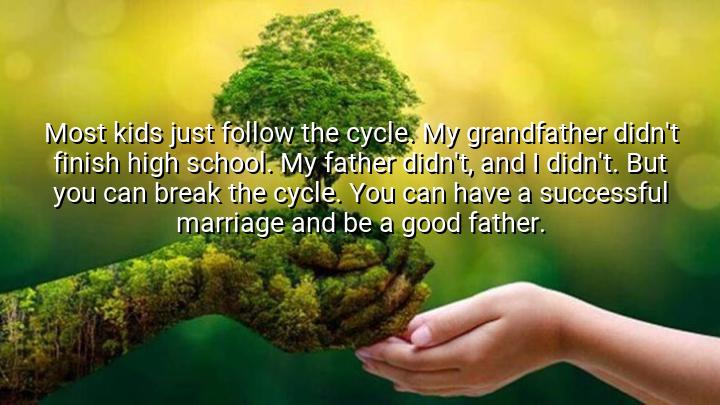




Eric D. Thomas's quote, "Most kids just follow the cycle. My grandfather didn't finish high school. My father didn't, and I didn't. But you can break the cycle. You can have a successful marriage and be a good father," speaks to the idea of breaking generational cycles of hardship or failure. Thomas highlights how patterns of behavior or circumstances—such as lack of education or difficult family dynamics—can persist across generations, often limiting opportunities and shaping one’s future. He refers to his own family history, where his grandfather, father, and even himself faced educational and societal obstacles, a cycle that many individuals might simply accept.
However, Thomas stresses the power of choice and the ability to change one’s path. The pivotal phrase, "you can break the cycle," is a message of hope and empowerment. He encourages the idea that no matter the generational challenges or difficulties, individuals have the power to overcome them and create a better future for themselves and their families. The message is rooted in the belief that one can choose a different path—whether through pursuing education, building a healthy relationship, or taking responsibility as a parent.
The second part of the quote emphasizes personal responsibility and the potential for growth and change in family dynamics. Thomas points out that one can not only achieve personal success but also break the cycle of poor relationships or absent fatherhood. The concept of a successful marriage and being a good father reflects the idea that individuals can redefine their roles, offering a better example for the next generation.
Eric D. Thomas, known for his motivational speaking and inspirational writings, often draws from his own life experience, which included overcoming poverty, a difficult childhood, and various setbacks. His message in this quote aligns with his broader philosophy of self-discipline, perseverance, and the transformative power of education and personal growth. The origin of the quote is deeply personal, reflecting his journey to break his own cycle of adversity and inspire others to do the same.

AAdministratorAdministrator
Welcome, honored guests. Please leave a comment, we will respond soon