

Mankind has probably done more damage to the Earth in the 20th century than in all of previous human history.
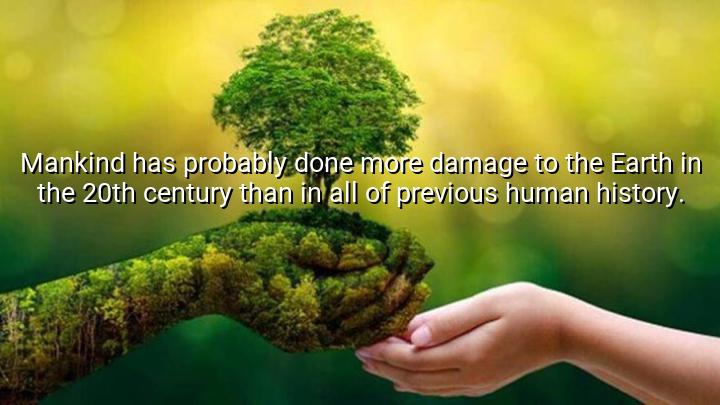




The quote by Jacques Yves Cousteau, "Mankind has probably done more damage to the Earth in the 20th century than in all of previous human history," emphasizes the unprecedented environmental impact of modern human activity. Cousteau, a renowned marine explorer and environmentalist, highlights how industrialization, urbanization, and technological advancements have accelerated the degradation of natural ecosystems. The statement serves as a stark reminder that the speed and scale of human-induced changes in the 20th century surpassed anything seen in prior eras.
By using the term damage, Cousteau points to a broad spectrum of ecological harm, including deforestation, pollution, and the over-exploitation of natural resources. The 20th century marked a period of rapid economic growth and global population expansion, which intensified environmental pressures. Cousteau’s observation underscores the idea that technological progress, while beneficial in many ways, can also carry significant ecological costs when not carefully managed.
The origin of this quote is deeply tied to Cousteau’s lifelong work in oceanography and environmental advocacy. Through his films, books, and public outreach, he sought to raise awareness about the fragility of the Earth’s ecosystems and humanity’s responsibility to protect them. His perspective reflects the growing environmental consciousness of the late 20th century, particularly as concerns about climate change, pollution, and species extinction became more prominent in public discourse.
Ultimately, Cousteau’s statement is both a warning and a call to action. It reminds humanity that the consequences of its choices are cumulative and that the 20th century represents a turning point where the impact on the planet became visible on a global scale. By highlighting this, he encourages a sense of stewardship and the urgent need for sustainable practices to mitigate further harm to the Earth.

AAdministratorAdministrator
Welcome, honored guests. Please leave a comment, we will respond soon