

The happiness of the bee and the dolphin is to exist. For man it is to know that and to wonder at it.
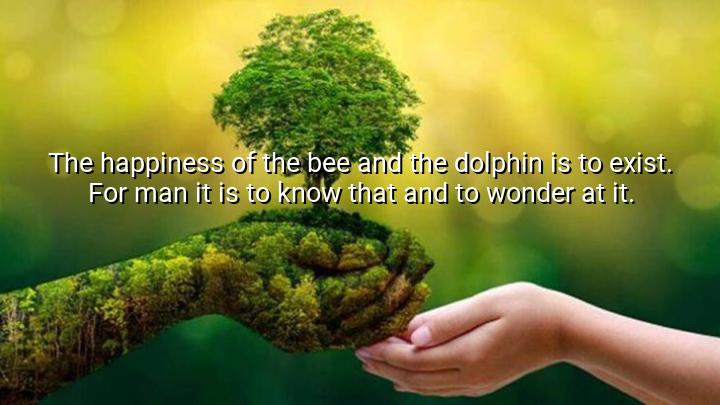




Jacques Yves Cousteau’s quote explores the idea that the happiness of creatures like the bee and the dolphin is found in their simple existence — their happiness lies in simply being alive and doing what comes naturally to them. In contrast, for humans, true happiness comes not just from existence, but from the awareness of this existence and the wonder it inspires. For humans, happiness involves a deeper level of reflection, where the mere act of being alive is something to be appreciated and marveled at, rather than taken for granted.
The phrase "to know that and to wonder at it" suggests that humans have the unique ability to reflect on their own existence and the world around them. Unlike animals, whose happiness is instinctive and unreflective, humans can find joy and meaning in the recognition of life's beauty and complexity. This intellectual and emotional appreciation elevates human experience, allowing us to experience a profound sense of awe and gratitude for life itself.
Cousteau, a marine biologist and explorer, spent much of his life studying marine life and advocating for the preservation of the oceans. His work often highlighted the simplicity and purity of animal life, contrasting it with the often complex and sometimes destructive nature of human activity. Through this quote, he points out the contrast between human consciousness and the instinctual existence of other creatures, suggesting that the human capacity to reflect is both a gift and a responsibility.
The origin of this quote lies in Cousteau’s profound appreciation for the natural world and his belief in the power of reflection. His explorations of the ocean and its creatures revealed a world where animals exist in harmony with their surroundings, finding happiness in their natural state. For humans, however, Cousteau emphasizes the unique ability to reflect on and marvel at this existence, which adds a layer of meaning to our experience of happiness.

AAdministratorAdministrator
Welcome, honored guests. Please leave a comment, we will respond soon