

Kids deserve to be taken seriously. It's just as important to talk to them about women's equality, about fairness. We really have to focus on children early.
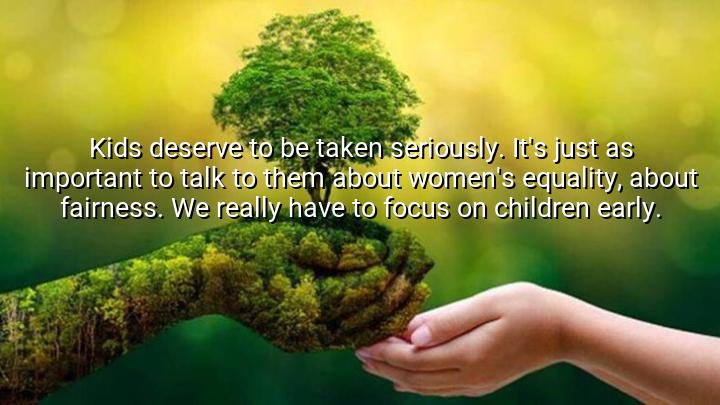




Meena Harris’s statement, “Kids deserve to be taken seriously. It's just as important to talk to them about women's equality, about fairness. We really have to focus on children early,” emphasizes the need to instill values of equality and fairness from a young age. By insisting that kids must be “taken seriously,” she challenges the notion that children are too young to engage with important social issues. Instead, she frames them as active participants in shaping a more just future.
The focus on women’s equality highlights her commitment to gender justice, while the broader call for fairness expands the principle to all aspects of social life. Harris suggests that conversations about rights and justice should not be reserved for adults but should begin in childhood, when values and worldviews are being formed. In doing so, she underlines education and open dialogue as tools for cultural change.
The origin of this quote lies in Meena Harris’s work as an author, activist, and lawyer. As the founder of the Phenomenal Woman Action Campaign, she has consistently pushed for greater awareness of gender equality and social justice. Speaking about children in this way aligns with her role as a children’s book author, where she has written stories designed to inspire young readers with lessons about justice, empowerment, and representation.
At its heart, the quote reflects both strategy and hope. By focusing on children early, Harris points to the long-term impact of raising generations who see equality and fairness not as political ideals but as natural, everyday expectations. Her words remind us that lasting cultural change begins not just in boardrooms or legislatures, but in the conversations adults choose to have with the youngest members of society.
Would you like me to also connect this to how children’s literature has historically been a vehicle for introducing social values?

AAdministratorAdministrator
Welcome, honored guests. Please leave a comment, we will respond soon