

I've sold my soul for freedom. It's lonely but it's sweet.
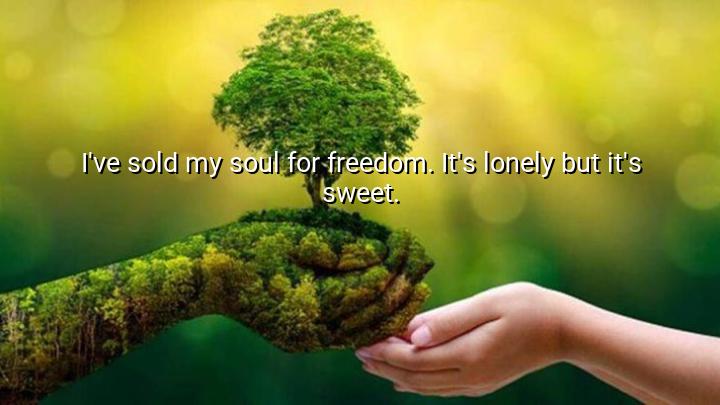




The quote "I've sold my soul for freedom. It's lonely but it's sweet" by Melissa Etheridge reflects the emotional complexities and sacrifices that come with gaining freedom. Etheridge, an acclaimed singer and songwriter known for her deeply personal music, often explores themes of independence, identity, and personal struggle. In this quote, she expresses the idea that the pursuit of freedom can sometimes come with costs, particularly in the emotional realm.
To "sell one's soul" typically implies giving up something of deep personal value or essence, often in exchange for something desirable like freedom. However, the phrase suggests that this freedom isn't entirely without its downside. The word "lonely" indicates that, while the freedom gained may be fulfilling and sweet, it can also leave one feeling isolated, disconnected, or without support. It's a trade-off, where independence and autonomy are gained at the expense of other aspects of life.
Etheridge’s words can be interpreted as a reflection of the internal conflict many face when they seek personal liberation—whether it’s from societal expectations, relationships, or self-imposed limitations. While freedom brings the possibility of self-expression and fulfillment, it also leaves one to navigate the consequences alone, often facing challenges without the safety net of others. In a way, this quote speaks to the loneliness that can accompany even the most rewarding personal victories.
The origin of this quote is rooted in Etheridge’s musical career and life experiences. As an openly lesbian artist who has long been an advocate for personal authenticity, she has faced both challenges and triumphs in her quest for self-expression and independence. Her journey likely shaped her view of freedom as something that can be both empowering and isolating, as she articulates so poignantly in this line.

AAdministratorAdministrator
Welcome, honored guests. Please leave a comment, we will respond soon