

I've learned from experience that the greater part of our happiness or misery depends on our dispositions and not on our circumstances.
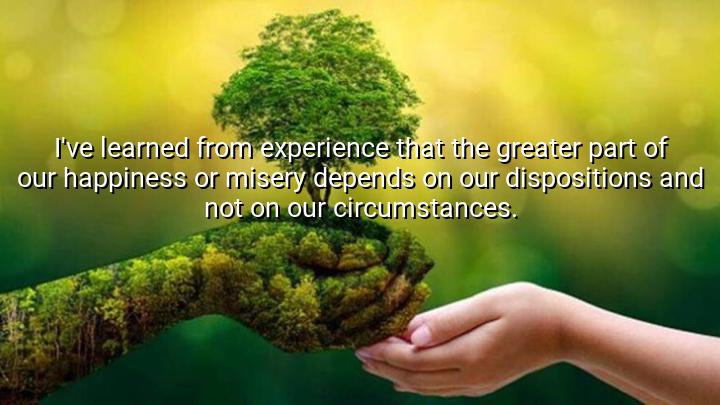




The quote by Martha Washington—"I've learned from experience that the greater part of our happiness or misery depends on our dispositions and not on our circumstances"—emphasizes the powerful role of our attitude and mindset in shaping our emotional well-being. Washington suggests that how we respond internally to situations matters more than the external events themselves. This highlights the idea that personal outlook can significantly influence whether we feel joy or suffering.
The origin of this quote comes from Martha Washington, the wife of George Washington and the first First Lady of the United States. Her life experience, which involved both privilege and hardship, gave her insight into the importance of maintaining a positive disposition regardless of challenging circumstances. This perspective reflects a timeless wisdom that inner resilience and mindset often determine our quality of life.
Washington’s words encourage us to focus on cultivating a strong and optimistic disposition as a way to navigate life’s ups and downs. Instead of being controlled by external events, she suggests that by shaping our attitudes, we have greater control over our own happiness. This mindset promotes emotional strength and personal empowerment.
In summary, Martha Washington’s quote reminds us that much of our emotional experience depends on how we choose to perceive and react to life’s situations. It inspires a focus on internal growth and positivity as keys to achieving greater happiness and reducing misery, no matter the circumstances we face.

AAdministratorAdministrator
Welcome, honored guests. Please leave a comment, we will respond soon