

The greater part of our happiness or misery depends on our dispositions and not our circumstances.
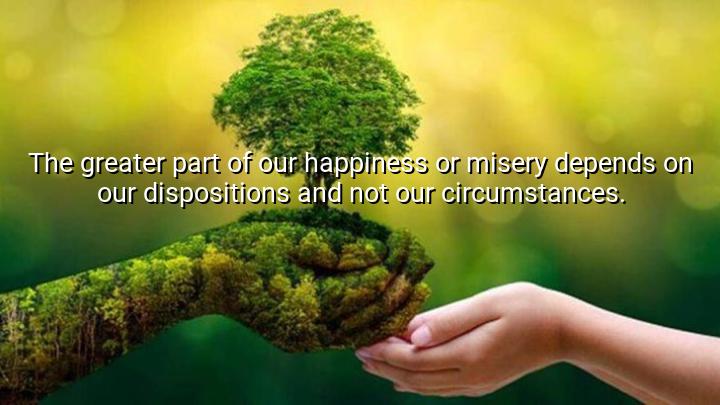




The quote by Martha Washington, "The greater part of our happiness or misery depends on our dispositions and not our circumstances," suggests that our emotional state and overall well-being are largely determined by how we choose to perceive and respond to the world, rather than by external circumstances. Washington emphasizes the power of our dispositions—our inherent attitudes, mental states, and outlooks—in shaping our experience of life. Whether we find happiness or misery depends more on how we approach challenges and opportunities than on the events that occur around us.
Washington's statement advocates for the importance of maintaining a positive mindset and resilience, even in difficult situations. It suggests that while we may not have control over external circumstances, we do have control over how we react to them. A person with a positive disposition can find joy and growth in adversity, while someone with a negative mindset might struggle to see the opportunities that lie within challenging times. The quote implies that inner peace and contentment are a result of cultivating the right attitude.
Furthermore, this quote speaks to the idea of personal responsibility for our emotions. It underscores the fact that while circumstances, such as wealth, health, or relationships, can influence our lives, the way we perceive and respond to them ultimately shapes our emotional experience. Our mental attitude plays a crucial role in determining our emotional resilience and ability to maintain happiness, regardless of external events.
The origin of this quote lies in the experiences and wisdom of Martha Washington, the wife of George Washington and the first First Lady of the United States. Known for her grace and strength, Martha Washington likely developed this perspective through her own experiences, navigating personal and public challenges throughout her life. The quote reflects her belief that emotional well-being comes from within, and that a positive disposition can transform how we experience the world around us.

AAdministratorAdministrator
Welcome, honored guests. Please leave a comment, we will respond soon