

The greater part of our happiness or misery depends on our dispositions and not on our circumstances. We carry the seeds of the one or the other about with us in our minds wherever we go.
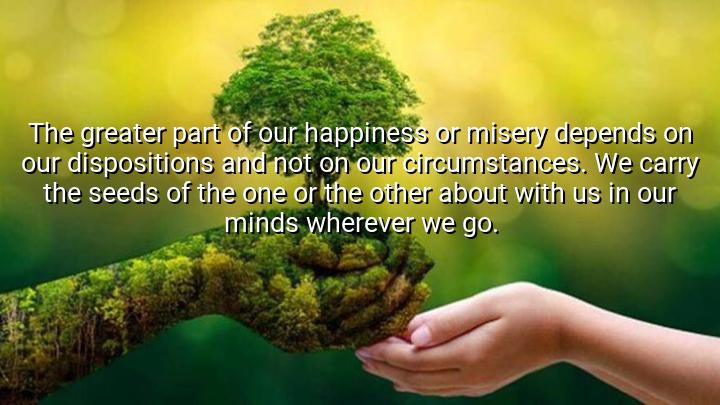




The quote by Martha Washington, "The greater part of our happiness or misery depends on our dispositions and not on our circumstances. We carry the seeds of the one or the other about with us in our minds wherever we go," highlights the powerful role that our internal mindset plays in determining how we experience life. Washington suggests that happiness and misery are more influenced by our attitudes, or dispositions, than by the external situations or circumstances we encounter. This reflects the idea that how we perceive and react to the world shapes our emotional well-being, regardless of external conditions.
Washington’s words point to the mindset as the key determinant of how we interpret and handle life’s challenges. A person with an optimistic and resilient disposition is more likely to find joy and contentment even in difficult situations. Conversely, someone with a negative or pessimistic mindset might struggle with misery, even if their external circumstances are favorable. This underscores the importance of cultivating a positive and balanced perspective to foster happiness.
The quote also suggests that we carry the potential for both happiness and misery within ourselves, regardless of where we are or what is happening around us. It is within our minds and dispositions that we hold the power to choose how we experience life. By recognizing this, we can take responsibility for our emotional responses and shift our focus to the things that promote inner peace and contentment.
Ultimately, Washington’s quote encourages us to focus on nurturing a positive disposition and awareness of our inner world, as this will have a greater impact on our overall well-being than any external factor. It serves as a reminder that while we cannot always control our circumstances, we do have the ability to control our attitude, which plays a crucial role in shaping our happiness.

AAdministratorAdministrator
Welcome, honored guests. Please leave a comment, we will respond soon