

I've always wanted to be independent and answer for myself. That probably is the part of me I would class to be feminist. I'd like to have children; marriage I have a bit of an issue with.
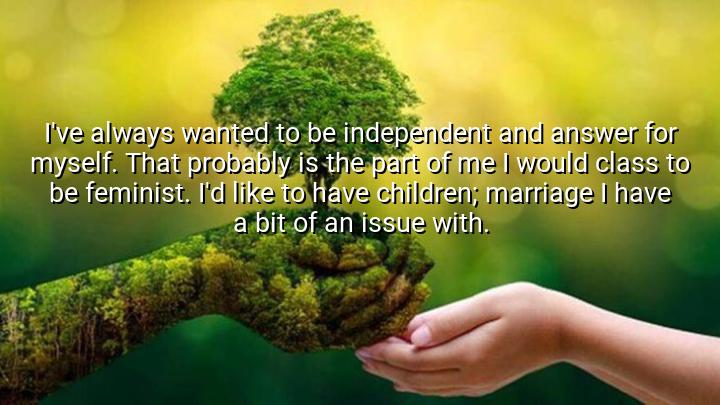




Kelly Brook’s quote reflects her desire for independence and the importance of being able to answer for herself, which she identifies as a central aspect of her feminism. By linking feminism to her personal values of autonomy and self-determination, she emphasizes that her understanding of feminism is rooted in the belief that women should have the freedom to make their own choices and control their own lives. This suggests that for Brook, feminism is less about adhering to a rigid set of expectations and more about empowering women to define their own paths, especially when it comes to personal decisions.
Brook’s comment about wanting to have children reflects a desire for family and motherhood, but her issue with marriage reveals a more complex stance on traditional institutions. While she envisions having a family, her hesitation about marriage suggests that she may not view it as essential or aligned with her personal values of independence. This could imply that she sees marriage as a potentially restrictive institution, one that might limit her freedom or autonomy, and therefore, not necessarily required for a fulfilling or successful life.
The statement shows a nuanced view of feminism, where Brook is not rejecting the idea of family or traditional relationships altogether, but rather questioning the necessity of marriage in the context of her values. Her feminism appears to embrace flexibility and choice, allowing for personal growth, motherhood, and independence without conforming to traditional societal expectations around marriage.
The origin of this quote comes from Kelly Brook, a British model, actress, and television presenter. Known for her career in the entertainment industry, she has often been in the public eye for her opinions on various issues, including feminism and relationships. This quote reflects her personal perspective on balancing independence, feminism, and family, showing that she values autonomy in shaping her own life and decisions.

AAdministratorAdministrator
Welcome, honored guests. Please leave a comment, we will respond soon