

Is word, sound, and powa dat break down de barriers of oppression an drive away transgression an rule equality.
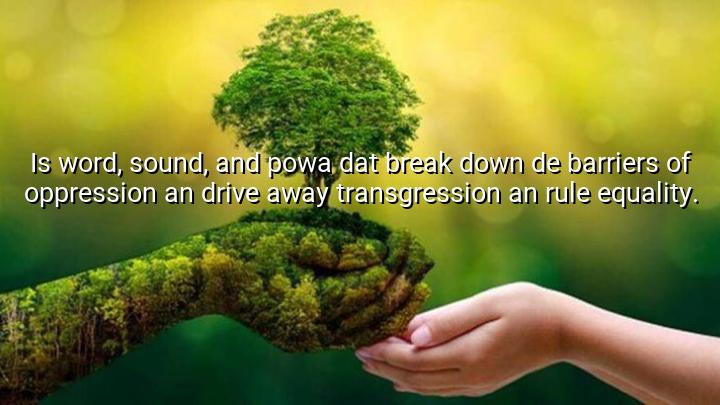




Peter Tosh’s quote, “Is word, sound, and powa dat break down de barriers of oppression an drive away transgression an rule equality,” reflects his deeply held belief in the power of music and speech as tools for social change. Tosh, a Jamaican musician and a founding member of the legendary reggae group The Wailers, was known for his outspoken activism. His words here suggest that word (spoken or written language), sound (music), and powa (power or force) are essential in dismantling systems of oppression and advancing equality.
The use of word and sound in the quote points to the idea that communication—whether through speech or music—can be a powerful force for challenging injustice. For Tosh, reggae music and its messages of resistance and empowerment were a way to counteract oppression. Music has long been a tool for political and social movements, and in this quote, Tosh connects the emotional and spiritual power of sound to the fight against inequality and injustice.
The term powa (power) in the quote suggests that change requires more than just words and music—it requires the collective power and will of people to act. Tosh is asserting that powa, in combination with word and sound, is what enables society to break through the barriers of oppression and promote equality. His call for this unity of forces is rooted in the belief that justice and freedom cannot be achieved through passive means alone, but through active resistance and solidarity.
Ultimately, Tosh’s quote encapsulates his belief in the transformative potential of word, sound, and powa in overcoming oppression and fostering equality. His activism was deeply intertwined with his music, and his message emphasizes the idea that collective action—driven by powerful, meaningful communication—can bring about real change in society.

AAdministratorAdministrator
Welcome, honored guests. Please leave a comment, we will respond soon