

In theory there is a possibility of perfect happiness: To believe in the indestructible element within one, and not to strive towards it.
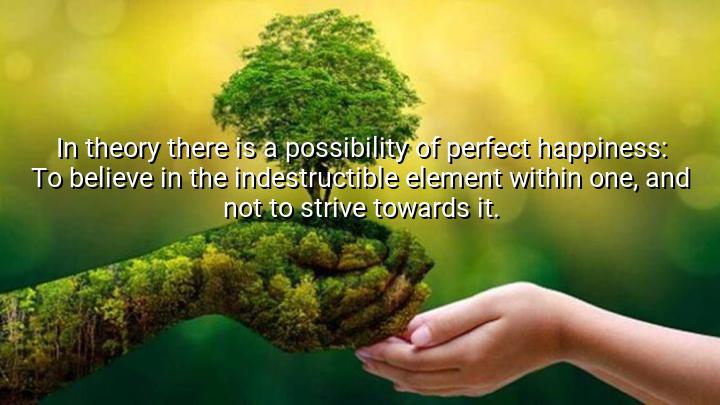




In this quote, Franz Kafka presents a complex and philosophical view of happiness. He suggests that, in theory, perfect happiness is achievable if we learn to believe in the indestructible element within ourselves. This refers to a core aspect of our being that is unaffected by external circumstances or hardships. Kafka implies that true happiness comes not from striving or seeking external success, but from recognizing and accepting this unchanging, inner strength or essence.
Kafka's statement also challenges the idea that happiness is something we must constantly pursue or work for. Instead, he proposes that if we trust in the inner self and its resilience, we can achieve a state of contentment. The idea of not striving towards this inner strength suggests that happiness may be found in acceptance and being present with oneself, rather than in endless pursuit or external validation.
The origin of this quote reflects Kafka’s deep existential and philosophical reflections on the human condition. As a writer often concerned with themes of alienation, anxiety, and the search for meaning, Kafka’s work often explored the tension between external expectations and internal desires. His belief in the possibility of perfect happiness aligns with his broader themes of searching for inner truth and peace despite an often chaotic and oppressive world.
Ultimately, Kafka’s words encourage us to look inward for peace and contentment, rather than constantly chasing external achievements or goals. By trusting in our own inner strength and recognizing the indestructible element within, we may be able to experience a form of happiness that transcends the difficulties and uncertainties of life.

AAdministratorAdministrator
Welcome, honored guests. Please leave a comment, we will respond soon