

In the kingdom of consumption the citizen is king. A democratic monarchy: equality before consumption, fraternity in consumption, and freedom through consumption.
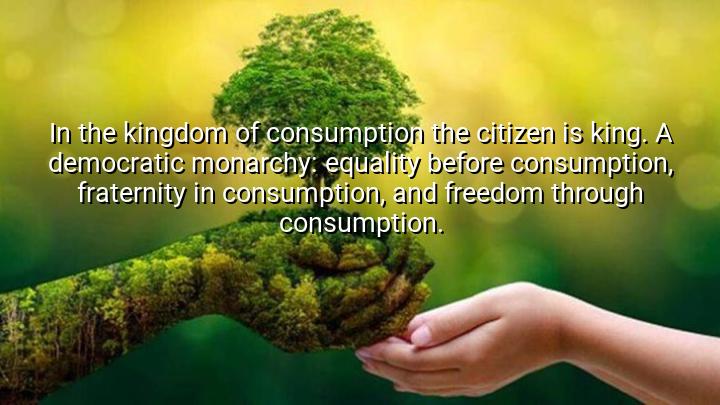




Raoul Vaneigem’s quote explores the idea that in a consumer-driven society, the act of consuming becomes a powerful force, with consumption itself taking on a role akin to that of a monarchy. The phrase "In the kingdom of consumption, the citizen is king" suggests that modern society elevates the consumer to a position of power, where purchasing goods and services is not just a basic need but a fundamental aspect of identity and freedom. Vaneigem uses this metaphor to critique how consumption has become central to people’s lives, often overshadowing other aspects of existence.
Vaneigem’s vision of a democratic monarchy points to the illusion of equality in modern consumerism. While everyone is "equal" in their right to consume, the notion of equality before consumption hides the disparities created by wealth and access. The phrase "fraternity in consumption" implies that people feel a sense of unity or community through their shared participation in the consumer culture, despite the inequalities beneath the surface. This sense of fraternity is superficial, as it ignores the deeper social and economic divisions that exist.
The quote also touches on the freedom promised by consumption. Vaneigem’s concept of freedom through consumption critiques the idea that buying more goods leads to greater individual liberty or self-expression. In his view, this form of freedom is shallow, as it limits true autonomy and personal growth, reducing freedom to mere economic activity. Instead of offering genuine empowerment, consumerism traps individuals in a cycle of desire and purchasing, ultimately reinforcing their role as subjects of the economic system rather than as truly free beings.
Raoul Vaneigem was a Belgian philosopher and member of the Situationist International, a group known for its critiques of capitalist society and its emphasis on radical freedom. His work, including this quote, reflects his belief that modern capitalism and its focus on consumption distort human relationships and inhibit authentic self-actualization. The quote challenges the conventional wisdom that equates consumerism with freedom and equality, urging people to rethink the true cost of a society driven by materialism.

AAdministratorAdministrator
Welcome, honored guests. Please leave a comment, we will respond soon