

I'm a heathen when it comes to marriage.
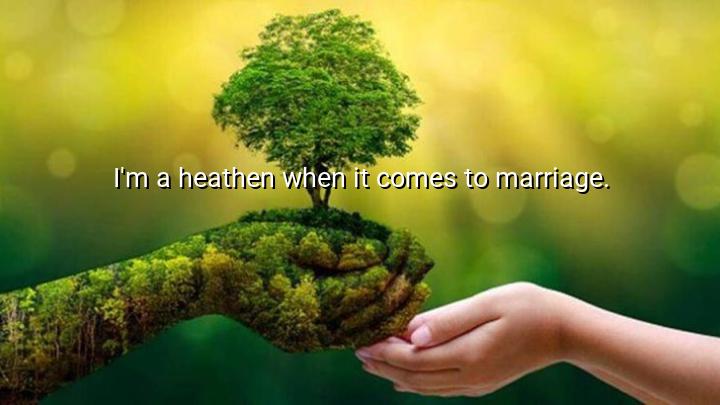




Greta Scacchi’s remark, “I’m a heathen when it comes to marriage,” carries both wit and defiance. By calling herself a heathen, she playfully rejects traditional expectations surrounding marriage, suggesting that she does not revere the institution in the way society often demands. The term implies being outside the accepted “faith” of matrimony—someone skeptical, unconventional, or simply unwilling to see marriage as a sacred necessity.
The phrase also hints at a broader critique of cultural norms. To label herself a heathen is to highlight the near-religious weight placed on marriage in many societies. Scacchi’s comment suggests she views love, partnership, and commitment as possible without the formal or ceremonial trappings, and that she resists the pressure to conform to that singular model of legitimacy.
The origin of this quote lies in Scacchi’s candid reflections on her personal life and choices. Known as a celebrated actress with an international career, she has often spoken with frankness about love and relationships outside conventional frameworks. Her comment about being a heathen reflects both her independence and her willingness to challenge expectations about how women, especially in the public eye, “should” live.
Ultimately, the quote is less a rejection of love than of conformity. By shrugging off the sanctity of marriage, Scacchi emphasizes personal freedom, authenticity, and the idea that fulfillment can take many forms. Her words invite us to reconsider whether social institutions serve the individual, or whether individuals are too often asked to serve the institution.
Would you like me to frame this alongside other artists and public figures who’ve used humor or irony to question marriage’s supposed universality?

AAdministratorAdministrator
Welcome, honored guests. Please leave a comment, we will respond soon