

If youth knew; if age could.
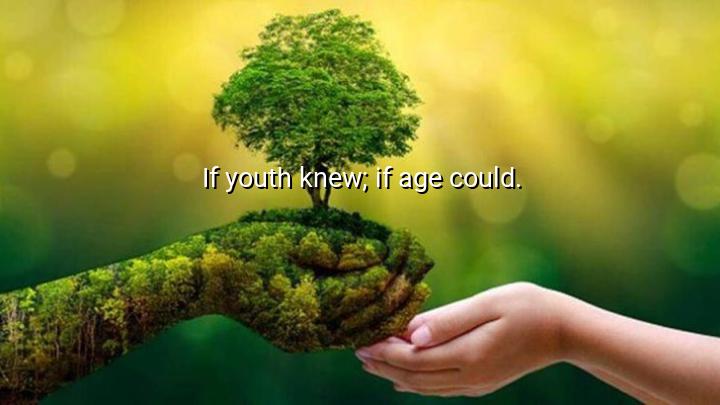




The quote "If youth knew; if age could" by Sigmund Freud reflects the common frustration of the limitations between youth and age. Freud, an Austrian neurologist and the father of psychoanalysis, often explored the complexities of human psychology and the paradoxes of life. This quote encapsulates the idealism of youth and the wisdom of age, highlighting how each phase of life brings certain advantages and limitations. Youth, full of energy and ambition, lacks the experience and wisdom that comes with age, while older individuals possess the knowledge and insight they wish they could have applied earlier, but their physical and mental capacities may have diminished.
Freud's words suggest a deep irony in the human condition—while youth is a time for exploration and potential, it is often a time of impatience and lack of foresight. In contrast, older age brings reflection and understanding, but it also often comes with a decline in energy or ability to act upon that knowledge. The quote encapsulates the longing to combine the energy of youth with the wisdom of age, suggesting that if one could merge the strengths of both stages, they would be unbeatable.
The phrase "If youth knew" points to how young people often fail to appreciate the significance of the knowledge they have or could gain, while "if age could" expresses the regret of older people who feel they have the wisdom but lack the physical ability to apply it. It speaks to the frustration of realizing that time and life experiences shape us in ways that are both empowering and limiting.
Ultimately, Freud’s quote invites us to reflect on the contradictions of life—how the qualities we value most in one stage of life seem inaccessible in another. It encourages a deeper understanding of balance and the challenges of life, urging us to recognize the value in each phase of our journey, while acknowledging the limitations we face along the way.

CLchung lolgg
What I love about this quote is how much it says in so few words. It captures this timeless struggle between youth and age, between desire and ability. But is it true that youth doesn't know and age can't do? There are exceptions to both. I've met wise teenagers and incredibly capable elders. So is this more a general truth or a stereotype that needs to be challenged?
VTBui van tai
This quote makes me think about how often I’ve heard older people say, ‘If I could go back knowing what I know now…’ It’s sad, really. Is regret just a natural part of aging, or can we learn to make peace with our younger selves’ decisions? And for younger generations, how do we convince them to take advice seriously without sounding patronizing or outdated?
MTManh Tran
I find this quote deeply frustrating in a philosophical way. It’s like Freud is pointing out a fundamental flaw in the human timeline—that we never have both capability and insight at the same time. But could that be a motivational force rather than a limitation? Maybe it's exactly that imbalance that drives progress—young people try boldly, and older people advise wisely. Is that overly idealistic?
HHHoang hieu
Freud’s quote strikes me as both poetic and tragic. It suggests a kind of built-in irony to the human experience. But is this divide truly inevitable, or have modern societies just failed to create better systems for sharing knowledge between generations? I wonder if cultures that value elders more deeply manage this better. Can we find ways to help youth 'know' before they learn the hard way?
TATo Nguyen Truc Anh
This quote really makes me think about the gap between potential and wisdom. Why is it that when we’re young and full of energy, we often lack the foresight or experience to make the most of it? And by the time we gain the wisdom, our capacity to act has diminished. Is there any way to bridge this divide—through mentorship, education, or intergenerational collaboration?