

If we gave up eating beef we would have roughly 20 to 30 times more land for food than we have now.
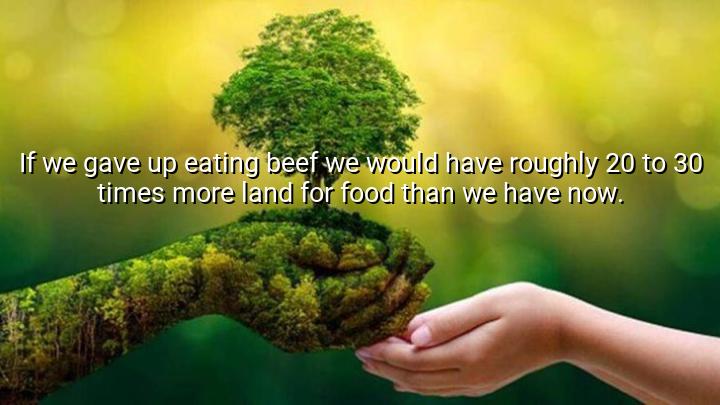




James Lovelock’s quote emphasizes the environmental and resource benefits of reducing beef consumption. He argues that if people collectively gave up eating beef, we could free up a significant amount of land—20 to 30 times more than is currently available for growing food. Lovelock is highlighting the inefficiency of beef production in terms of land use, water, and energy. Cattle farming requires vast amounts of land to raise livestock and grow the feed they consume, which could instead be used for more sustainable and efficient agricultural practices, such as growing crops directly for human consumption.
The origin of this quote stems from Lovelock’s work as a scientist and environmentalist. He is best known for developing the Gaia Theory, which proposes that the Earth and its ecosystems function as a single living organism. Lovelock has long been an advocate for reducing human impacts on the environment, and this quote reflects his belief in the importance of sustainable practices. His statement about beef is rooted in the broader conversation around the environmental footprint of animal agriculture and its contribution to climate change, deforestation, and biodiversity loss.
Lovelock’s quote speaks to the broader issue of food systems and their role in the global environmental crisis. Beef production is highly resource-intensive, using up enormous amounts of land, water, and energy compared to growing plants. By shifting away from beef toward more plant-based diets, societies could reduce the strain on the planet’s natural resources and allocate land more effectively to meet the needs of a growing global population.
Ultimately, Lovelock’s quote is a call to action for rethinking our food choices in order to create a more sustainable and resource-efficient food system. By reducing beef consumption, not only could we free up land for more productive uses, but we could also significantly reduce the environmental damage caused by industrial-scale animal farming. It’s a powerful reminder of the potential for individual action and global shifts in diet to contribute to a more sustainable future.

AAdministratorAdministrator
Welcome, honored guests. Please leave a comment, we will respond soon