

If there is such a thing as freedom, then there is no fate.
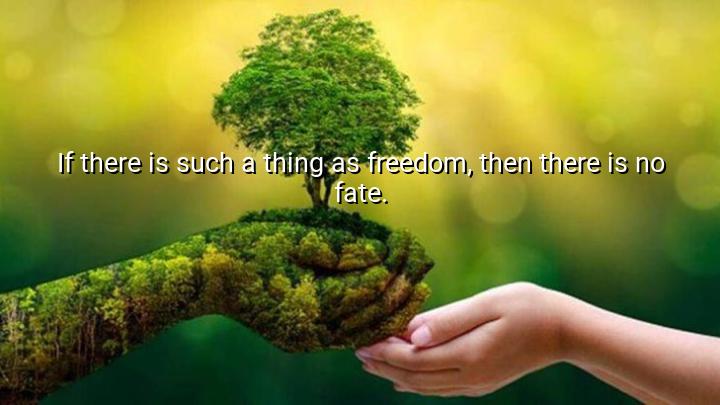




In this quote, Imre Kertesz explores the concept of freedom and its relationship to fate. He argues that if freedom truly exists, then the idea of fate—or a predetermined destiny—becomes irrelevant. Kertesz suggests that true freedom allows individuals to make their own choices and shape their own paths, without being bound by any external force or preordained outcome. This perspective challenges the belief that certain events in life are inevitable or fated to happen, instead promoting the idea that we have the power to determine our future.
The quote reflects Kertesz's broader philosophical views, which often dealt with the themes of individual choice, responsibility, and the struggle for personal autonomy. By stating that "if there is such a thing as freedom, then there is no fate," he underscores the importance of personal agency and the idea that our actions shape our lives. For Kertesz, freedom is not just the absence of external constraints, but the internal realization that we have control over our decisions and their consequences.
In many ways, the quote challenges fatalistic views of life, where people might feel as though they are powerless in the face of circumstances. Instead, Kertesz advocates for a worldview in which individuals are not subject to the whims of fate, but instead are active participants in crafting their own stories. This perspective aligns with existential thought, which emphasizes self-determination and the rejection of deterministic or fatalistic forces.
Ultimately, Kertesz’s quote serves as a reminder of the empowerment that comes with freedom. It calls for individuals to embrace their capacity to make choices and take responsibility for their lives, while rejecting the notion that their fate is already written. This belief in freedom is both a philosophical and existential stance, encouraging personal growth, self-expression, and the realization of one’s own potential.

AAdministratorAdministrator
Welcome, honored guests. Please leave a comment, we will respond soon