

If there is any principle of the Constitution that more imperatively calls for attachment than any other it is the principle of free thought, not free thought for those who agree with us but freedom for the thought that we hate.
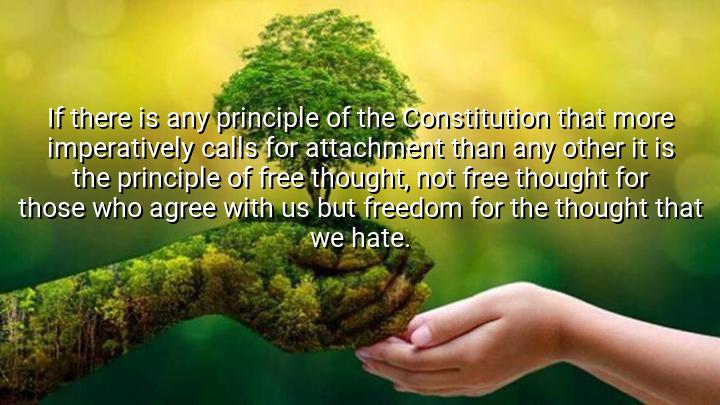




In this quote, Oliver Wendell Holmes, Jr. underscores the centrality of free thought as a fundamental principle of the Constitution. Holmes emphasizes that true freedom of thought is not just about protecting ideas we agree with, but also about safeguarding the right to freedom of thought for ideas we may disagree with or even hate. This statement highlights the importance of allowing all viewpoints to be expressed, even if those viewpoints challenge or contradict our own beliefs.
Holmes is making a powerful point about the limits of freedom of speech and the necessity of tolerating divergent opinions. He suggests that in a democratic society, the protection of free expression is most crucial when it shields ideas and opinions that are unpopular or controversial. This is in contrast to the more comfortable notion of free speech that only protects ideas we find agreeable. The quote challenges the idea that freedom should only apply to mainstream opinions, arguing instead that it is most important when it protects those who hold minority or dissenting views.
The principle Holmes articulates has significant implications for how we understand constitutional rights and freedom in practice. By highlighting the need for tolerance even for those ideas we may hate, Holmes calls for a deeper commitment to democracy, where all voices are allowed to participate, regardless of their content. This is a reminder that the true test of free speech lies in its ability to protect the speech we find offensive or challenging, not just the speech we support.
Ultimately, Holmes’ quote calls for greater intellectual courage and a commitment to the principle of freedom of expression in its purest form. It invites us to reflect on the importance of protecting even those ideas we may find repugnant, for in doing so, we safeguard the democratic values that allow for a diversity of thoughts and opinions to thrive.

AAdministratorAdministrator
Welcome, honored guests. Please leave a comment, we will respond soon