

I think history is collective memories. In writing, I'm using my own memory, and I'm using my collective memory.
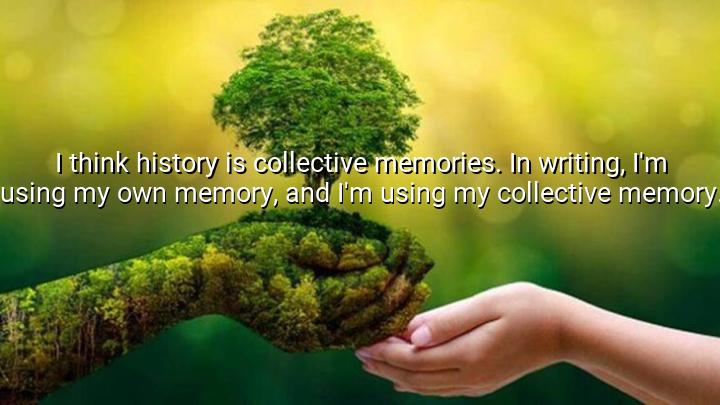




Haruki Murakami’s quote, "I think history is collective memories. In writing, I'm using my own memory, and I'm using my collective memory," explores the relationship between individual and shared experiences in shaping the past. For Murakami, history isn't just a collection of dates and events; it's also the way memories are passed down and how people collectively remember and interpret the past. His writing draws on both his personal memories and the broader cultural narratives that shape the world around him.
Murakami emphasizes that writing is a process of blending the individual and the collective. While he taps into his own personal experiences, he also acknowledges the influence of the collective memory, which refers to the shared recollections, values, and stories within a community or society. This dual memory gives a richer and more nuanced perspective of history, blending subjective experience with the objective facts that are passed through generations.
The idea of collective memory has roots in sociology and history, suggesting that communities form their identities through shared recollections of the past. Murakami’s perspective highlights how writers, through their creativity, become vessels for both individual thoughts and the broader societal consciousness. His view emphasizes that history isn't just recorded; it's experienced and reinterpreted by each generation.
This quote reflects the philosophical and reflective nature of Murakami’s works, where themes of memory, time, and identity are often explored. It speaks to his belief in the fluidity of memory and how both personal and collective pasts intertwine in shaping one’s understanding of the world. The origin of this insight likely comes from Murakami's lifelong interest in the intersection of individual and societal consciousness.

AAdministratorAdministrator
Welcome, honored guests. Please leave a comment, we will respond soon