

I think a lot of people will be liberated from a lot of oppressive manufacturing jobs, or a lot of service jobs, because they'll be done by computers. There'll be the world's best education available online and free.
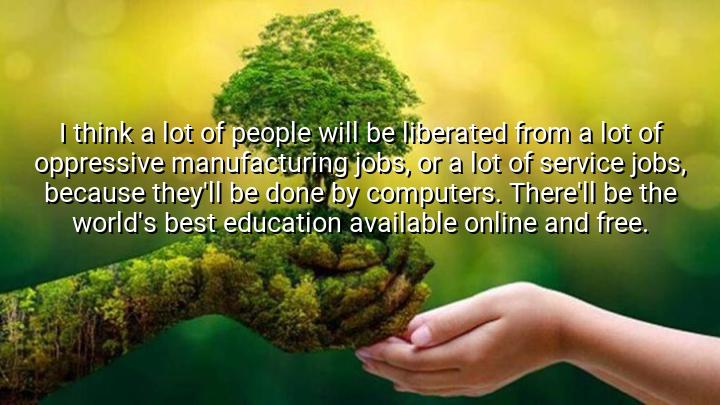




Tyler Cowen’s quote envisions a future where technology plays a central role in reshaping the workforce and education systems. He suggests that the increasing automation of tasks will lead to the liberation of many individuals from oppressive or mundane jobs, particularly in fields like manufacturing and service industries. By relying on computers to perform these tasks, humans will be freed to engage in more creative, meaningful, and higher-level work, shifting the focus of the workforce.
Cowen also emphasizes the transformative potential of education in this future world. He predicts that online education will become more widespread and accessible, offering the world's best education to anyone with an internet connection. With this widespread availability, learning will no longer be confined by geographical location, economic status, or traditional institutions. The idea of education being free and accessible to all represents a significant democratization of knowledge.
This quote reflects Cowen’s view on the future of work and how technological advances, particularly automation and AI, can shift societal structures. Rather than fearing job losses due to automation, he presents an optimistic vision where technology frees people from the constraints of low-wage, repetitive work and allows them to pursue intellectual and creative opportunities. This shift could potentially lead to a more productive and innovative society, where individuals are empowered by new opportunities for personal and professional growth.
The origin of Cowen’s quote likely stems from his broader work in economics and his interest in how technological innovation can disrupt existing social and economic systems. He often discusses the implications of automation, digital platforms, and the changing nature of work in the modern world. This quote reflects his belief that advances in technology can improve the quality of life for individuals by providing more opportunities for education and enabling a more flexible and creative economy.

AAdministratorAdministrator
Welcome, honored guests. Please leave a comment, we will respond soon