

I like gardening - it's a place where I find myself when I need to lose myself.
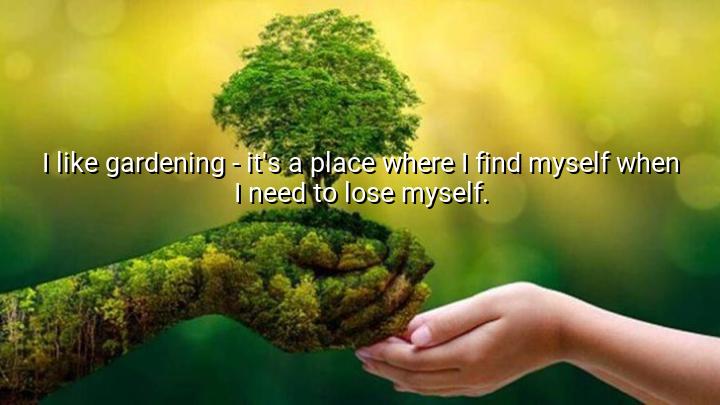




The quote by Alice Sebold, "I like gardening - it's a place where I find myself when I need to lose myself," speaks to the therapeutic and transformative qualities of gardening. Sebold suggests that gardening offers a space where one can disconnect from the noise of the world and engage in a process of both self-reflection and escape. It is a place where the act of tending to plants, digging in the soil, and observing nature allows her to feel grounded, yet it also provides the mental clarity needed to temporarily let go of her usual thoughts and concerns.
In this context, gardening becomes a form of meditation or mindfulness, where the focus shifts from the external world to the present moment and the simple tasks at hand. Sebold’s statement indicates that through the physical act of working with nature, she is able to experience a sense of peace and reconnection. At the same time, gardening offers an opportunity to lose oneself in the process, leaving behind the stress of daily life and finding solace in the quiet, nurturing environment of the garden.
This quote also touches on the duality of gardening as both an active and restorative experience. While it requires physical effort, it also allows the gardener to detach from everyday worries and reflect on deeper aspects of life. The act of planting, caring for, and watching something grow offers both a sense of purpose and relief, providing balance in moments when the mind needs a break. Sebold captures the way gardening serves as both a creative outlet and a form of healing.
The origin of this quote is tied to Alice Sebold’s personal experience and her exploration of themes like healing, recovery, and self-discovery in her writing. Known for her novel The Lovely Bones, which delves into grief and the process of healing after trauma, Sebold often writes about the emotional and spiritual paths toward renewal. This quote reflects her understanding of the importance of solitude and nature in finding peace within oneself, allowing for a balance between action and reflection.

AAdministratorAdministrator
Welcome, honored guests. Please leave a comment, we will respond soon