

I give the fight up: let there be an end, a privacy, an obscure nook for me. I want to be forgotten even by God.
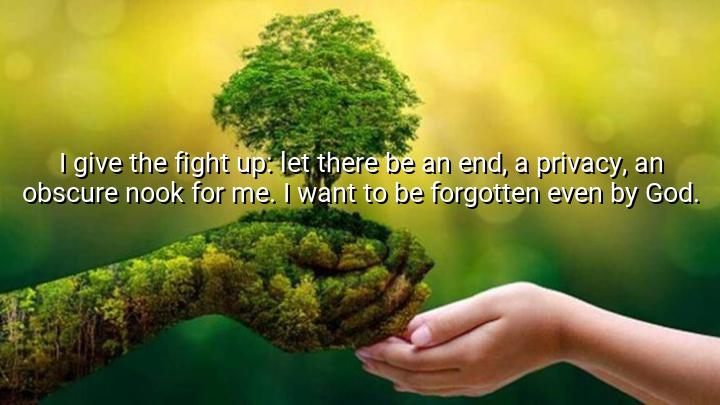




The quote "I give the fight up: let there be an end, a privacy, an obscure nook for me. I want to be forgotten even by God" by Robert Browning reflects a moment of deep exhaustion and a desire for solitude. In these words, Browning expresses a longing to escape from the struggles and burdens of life. The phrase "I give the fight up" suggests that the speaker has reached a point of emotional or spiritual fatigue, where they no longer wish to engage in the battle of life, whether it be personal, societal, or existential.
The idea of wanting to be forgotten, even by God, is particularly poignant, as it indicates a profound sense of alienation and despair. The speaker yearns for privacy and a quiet, anonymous existence, away from the attention and demands of both the world and the divine. This reflects a desire to retreat into an "obscure nook" where they can find peace without the weight of recognition or expectation.
This quote is rooted in Browning's exploration of the complexities of human emotions, particularly in the context of loneliness, suffering, and the search for inner peace. Browning often delved into the inner workings of the human psyche in his poetry, exploring themes of despair, isolation, and the desire for personal space. In this quote, the speaker is essentially seeking an end to the constant fight for significance, yearning for an existence free from the burdens of both worldly and divine attention.
The origin of the quote lies in Browning's works, particularly in the context of his broader literary exploration of human nature and psychological depth. This quote captures the emotional intensity and complexity of Browning's characters, often individuals caught in inner turmoil. It reflects a universal human feeling—a moment when the weight of life's struggles leads one to desire peace, even if that peace means being forgotten by the world and even by God.

AAdministratorAdministrator
Welcome, honored guests. Please leave a comment, we will respond soon