

Earth changes, but thy soul and God stand sure.
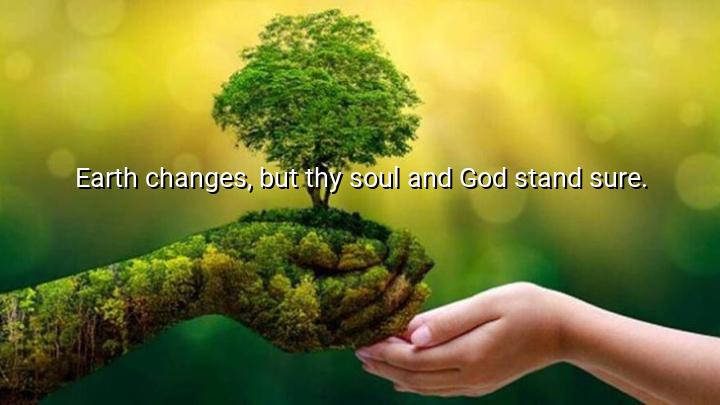




In this quote, Robert Browning expresses a profound belief in the enduring nature of the soul and God in contrast to the transient and ever-changing world around us. "Earth changes" acknowledges the impermanence of life, the earth, and the circumstances we encounter, which are subject to forces like time, decay, and uncertainty. However, Browning emphasizes that in the face of these changes, the soul and God remain constant and unwavering. This offers a sense of comfort and stability, suggesting that despite life's fleeting nature, there are eternal truths that we can rely on.
The idea that the soul and God "stand sure" suggests that they are the anchors in a world full of unpredictability. Browning contrasts the ephemeral nature of earthly existence with the eternal and unchanging aspects of the spiritual realm. This quote can be interpreted as a reminder that our spiritual essence and connection to the divine are not subject to the whims of time, and that there is a deep, unshakable foundation to the human experience that transcends worldly challenges and upheavals.
This statement is also a reflection of Browning's broader philosophical and theological views. He was deeply interested in questions of faith, human existence, and morality, and his works often dealt with themes of spiritual endurance and the tension between the transient and the eternal. In this context, Browning’s quote serves as an invitation to cultivate inner strength through a connection with the divine and to trust in the immortal aspects of our being, regardless of the temporary struggles of the physical world.
The origin of this quote is from Robert Browning, a 19th-century English poet known for his dramatic monologues and philosophical poetry. His works often explored the depths of the human soul and the complexities of faith. This quote reflects his belief in the enduring power of both the soul and the divine, themes that were central to his spiritual outlook. Browning’s works continue to resonate for their exploration of the human condition and the search for truth amid life's uncertainties.

AAdministratorAdministrator
Welcome, honored guests. Please leave a comment, we will respond soon