

I find that a man is as old as his work. If his work keeps him from moving forward, he will look forward with the work.
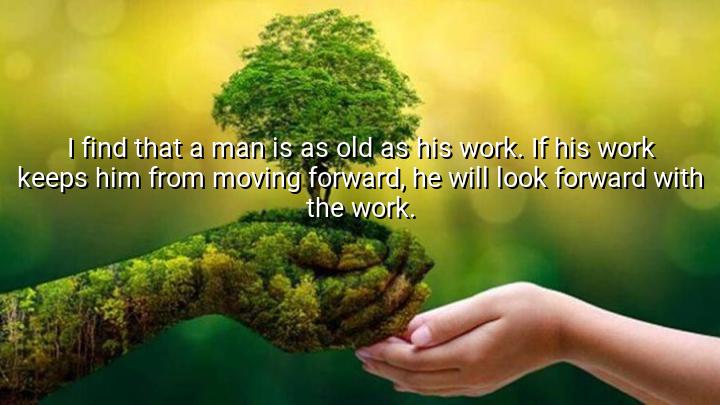




The quote "I find that a man is as old as his work. If his work keeps him from moving forward, he will look forward with the work" by William Ernest Hocking suggests that work plays a significant role in how we experience and perceive aging. Hocking, an American philosopher and professor, explores the idea that one's career or pursuit is closely tied to their sense of vitality and progression in life. If a person’s work is no longer fulfilling or allows them to grow, they may find themselves stagnating, metaphorically aging alongside their work rather than evolving personally or professionally.
Hocking’s point is that work can either be a source of energy and growth or a limitation. If a person feels stuck in their job, unable to advance or find meaning, it can feel like their life is similarly stuck, and they begin to age internally in the same way that their work has stagnated. This stagnation can lead to a sense of boredom or disillusionment, which affects both their attitude and how they interact with the world.
The second part of the quote, "If his work keeps him from moving forward, he will look forward with the work", suggests that when work limits one’s growth, it can dominate their thoughts and future. A person may stop looking ahead to new opportunities or experiences because they are overly focused on the constraints of their current situation. Essentially, their work becomes their future, and they stop seeing a broader horizon of personal or professional growth.
Ultimately, Hocking’s quote implies that engagement in meaningful work is essential to feeling young and progressive, while stagnation in work can lead to a sense of aging that goes beyond the physical. It emphasizes the importance of staying active and engaged in one’s work and life to avoid becoming trapped by limitations that hinder growth.

MTNguyen Manh Tien
This quote struck a chord with me. It suggests that purpose is a key factor in how old we feel. If our work gives us a sense of direction and growth, it fuels us. But what if your work isn’t fulfilling or becomes repetitive? Does that mean you're mentally and emotionally aging faster? It’s a powerful argument for lifelong learning and career reinvention at any age.
CQDien Chinh Quoc
I like the idea that staying passionate about your work can be an antidote to aging. But I also wonder if that places too much pressure on people to stay productive forever. Can someone be at peace with aging and still be content without always 'moving forward' in work? Maybe the definition of progress shifts over time, and what matters is being present, not just progressing.
MNMai Ngoc
This quote seems especially relevant in the context of creative or intellectual work. Artists, writers, researchers—many continue vibrant, boundary-pushing work well into old age. It makes me wonder: does society undervalue the potential of older workers simply because of outdated ageist assumptions? Maybe age is less about years and more about mindset and the trajectory of your contributions.
HPHuyen Pham
I’m curious about the psychological side of this quote. Could it mean that mental engagement and ambition actually have the power to slow down how we feel aging? If your work continues to evolve and challenge you, maybe your sense of time and aging shifts. But what happens when your field doesn’t change or reward innovation? Can you still stay 'young' if the system around you stays static?
CTdit cu con Tam
There's something inspiring yet sobering in this quote. It suggests that stagnation in work equals stagnation in life. But what about people who don't have the luxury of pursuing meaningful or forward-moving work? Are they doomed to feel 'old' before their time? I think it raises important questions about the kind of society we’ve created—one that often limits people’s potential based on economic status or access to opportunity.