

I feel monotony and death to be almost the same.
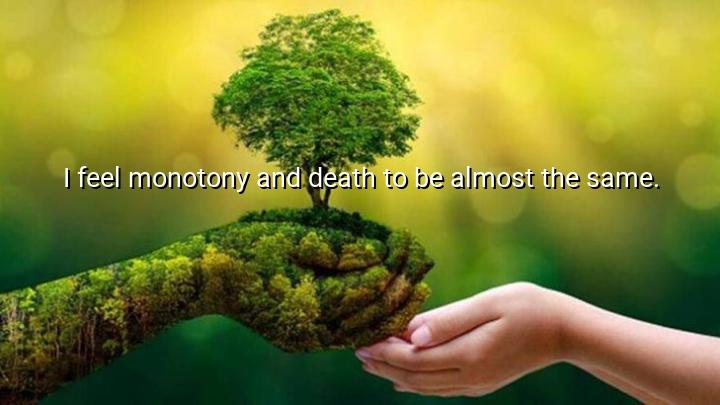




Charlotte Brontë’s quote, "I feel monotony and death to be almost the same," conveys the emotional and psychological impact of living a life without change, excitement, or meaning. Brontë suggests that when life becomes monotonous—repetitive and unchanging—it loses its vibrancy and feels lifeless. The comparison between monotony and death emphasizes that a lack of stimulation or purpose can feel like a slow, emotional death, where one’s spirit or vitality fades, even though the body continues to exist.
Brontë, a renowned English novelist and the author of classics like Jane Eyre, often explored themes of inner conflict, isolation, and personal struggle. This quote reflects her understanding of how the human spirit can become stifled in a routine existence, especially when that life lacks fulfillment or growth. The idea that monotony can be as soul-draining as death highlights Brontë’s deep awareness of the emotional toll of unchanging, uninspiring circumstances.
The quote also speaks to a broader existential truth: when life feels stuck in a repetitive cycle, it can lead to a sense of emptiness or stagnation. Brontë implies that the absence of variety, growth, and change can rob life of its meaning, much like how death is the final cessation of experience and opportunity. This feeling is often echoed in the lives of her characters, who seek freedom and change to break away from their own monotonous or oppressive circumstances.
The origin of this quote likely stems from Brontë’s own life and literary themes. As a woman writing in a time when societal norms often imposed strict limitations on personal freedom, Brontë’s characters often struggled against the monotony of restrictive roles. The quote encapsulates her belief that a life devoid of personal growth or change can feel as unfulfilling and lifeless as death itself.

AAdministratorAdministrator
Welcome, honored guests. Please leave a comment, we will respond soon