

I am no bird; and no net ensnares me; I am a free human being with an independent will.
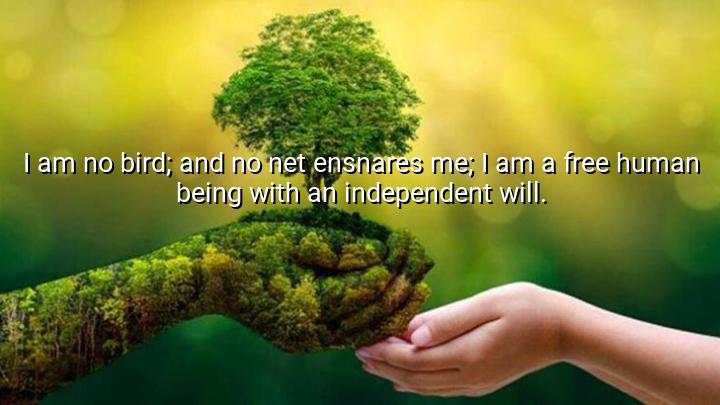




In this powerful quote, Charlotte Brontë expresses a declaration of independence and personal strength. The phrase "I am no bird" signifies her rejection of being confined or controlled, while "no net ensnares me" further emphasizes the idea of freedom from any form of restraint. Brontë’s protagonist, likely speaking through the character of Jane Eyre, is asserting that she will not allow herself to be limited by society, expectations, or relationships. The quote reveals a deep commitment to individuality and the freedom to make one's own choices.
The phrase "I am a free human being with an independent will" encapsulates the core of this declaration. It highlights the character’s inner strength, autonomy, and the right to make decisions for herself. This statement challenges societal norms, particularly those that restricted women’s freedoms in Brontë’s time, and reinforces the idea that true freedom lies in the ability to act according to one's own will. Brontë, through her character, is advocating for the value of personal freedom and self-determination.
The origin of this quote comes from Jane Eyre, a novel by Charlotte Brontë, which explores themes of empowerment, identity, and resistance. In the novel, Jane Eyre is a strong-willed and independent woman who faces numerous challenges as she navigates a world that tries to restrict her freedom. This particular quote marks a moment of defiance against forces that seek to control her, making it a crucial expression of her autonomy.
Ultimately, Brontë’s quote speaks to the universal desire for self-liberation and the importance of retaining one’s own will. It encourages individuals to assert their right to live authentically and without being constrained by external forces, embodying a timeless call for personal agency and freedom.

AAdministratorAdministrator
Welcome, honored guests. Please leave a comment, we will respond soon