

Charity is injurious unless it helps the recipient to become independent of it.
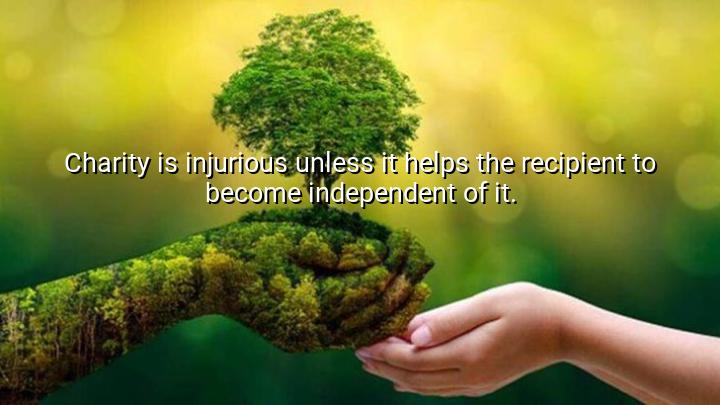




The quote "Charity is injurious unless it helps the recipient to become independent of it." by John D. Rockefeller emphasizes the importance of empowerment in charitable acts. Rockefeller argues that while charity can be a means of providing immediate relief, it becomes harmful if it does not ultimately help the recipient to become self-sufficient. The true value of charity, according to Rockefeller, lies not in simply giving aid, but in fostering the independence of the person receiving it, allowing them to stand on their own and no longer rely on external assistance.
The origin of this quote is rooted in Rockefeller's own approach to philanthropy. As one of the wealthiest men in history and a significant philanthropist, he believed that charitable donations should be aimed at creating long-term solutions, rather than providing temporary relief. He understood that true charity would enable individuals to rise above their circumstances, focusing on sustainable methods of support, such as education and job opportunities, rather than continuous handouts.
Rockefeller’s perspective reflects a broader philosophy about social responsibility and the importance of self-reliance. He believed that charity should not be about creating dependency, but about giving people the tools and resources they need to improve their own lives. This view aligns with his broader approach to philanthropy, which included funding initiatives that aimed to tackle the root causes of social issues, rather than simply addressing the symptoms.
The quote continues to inspire modern discussions on the ethics of charity and the role of social welfare programs. It serves as a reminder that the ultimate goal of helping others should be to support their independence and long-term well-being, rather than fostering reliance on ongoing charity. Rockefeller's view challenges us to think about the lasting impact of charitable acts and whether they truly empower individuals to achieve self-sufficiency.

AAdministratorAdministrator
Welcome, honored guests. Please leave a comment, we will respond soon