

After it is all over, the religion of man is his most important possession.
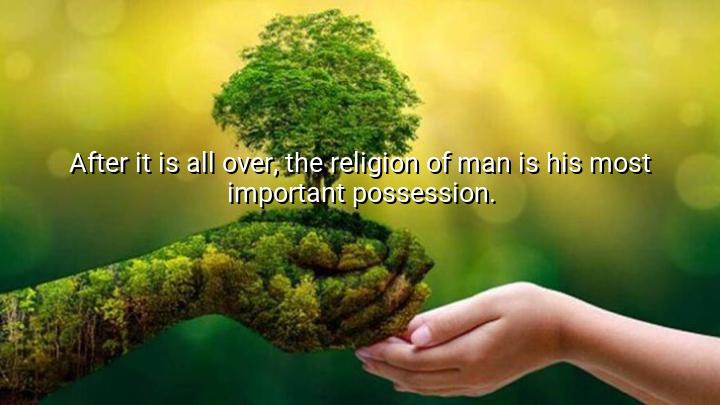




In this quote, John D. Rockefeller emphasizes the idea that after all the material pursuits and achievements of life, religion holds the greatest significance as a guiding force for the human spirit. Rockefeller suggests that religion—or perhaps a deeper spirituality—is ultimately the most important possession a person can have, especially when considering the transience of material wealth and success. The phrase "after it is all over" implies that in the end, what truly matters is not the money or status one has accumulated, but the spiritual foundation that gives life meaning.
Rockefeller's view also reflects his belief in the role of religion in shaping a person’s character and actions. By stating that religion is a possession, he indicates that it is something deeply personal, valuable, and enduring. This spirituality provides a sense of purpose and moral grounding that cannot be easily taken away, unlike physical wealth or other material gains. It suggests that in the face of life's inevitable challenges, faith can offer solace and direction.
Given Rockefeller's position as one of the wealthiest men in history, this statement carries particular weight. Having amassed a fortune through his business ventures, especially in the oil industry, he likely witnessed firsthand the limitations of wealth when it comes to finding true contentment and peace of mind. His philanthropy later in life also reflects his desire to give back and contribute to the greater good, possibly as part of his evolving understanding of spiritual values.
The origin of the quote comes from John D. Rockefeller, a titan of industry, known for founding the Standard Oil Company and for his philanthropic efforts. Despite his immense financial success, Rockefeller’s personal reflections later in life often focused on spirituality and the moral responsibility of wealth. This quote encapsulates his belief that, while material wealth can bring temporary satisfaction, religion and spiritual fulfillment provide lasting peace and true value in life.

AAdministratorAdministrator
Welcome, honored guests. Please leave a comment, we will respond soon