

I believe in the equality of man; and I believe that religious duties consist in doing justice, loving mercy, and endeavoring to make our fellow-creatures happy.
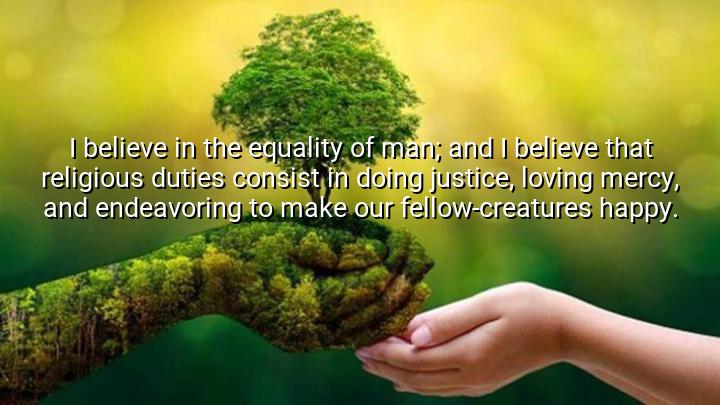




Vidal Sassoon’s quote, "I believe in the equality of man; and I believe that religious duties consist in doing justice, loving mercy, and endeavoring to make our fellow-creatures happy," conveys a deep commitment to both human equality and compassionate action. Sassoon, known for revolutionizing the hairdressing industry, uses this statement to express his belief that all individuals, regardless of background or status, are entitled to equal treatment and respect. His emphasis on equality suggests that societal structures should be designed to ensure that all people are treated fairly and without discrimination.
The second part of the quote expands on Sassoon’s vision of religious duties, not as rituals or doctrines, but as practical actions that promote goodness in the world. By stating that "religious duties consist in doing justice, loving mercy, and endeavoring to make our fellow-creatures happy," Sassoon suggests that true spiritual practice is about actively working to make the world a better place. These duties are framed in terms of justice, mercy, and happiness, which are values that can be enacted through kindness and fairness toward others, emphasizing that spirituality is grounded in human connection and empathy rather than dogma.
The quote reflects a philosophy of life that goes beyond formal religious observance and focuses instead on ethical living and social responsibility. Sassoon was deeply influenced by his own experiences growing up in a difficult environment and his later success in life. He believed that personal growth and the pursuit of happiness should be rooted in a commitment to making a positive impact on others, especially by ensuring that people are treated with respect and dignity.
Vidal Sassoon, while best known for his contributions to the beauty industry, was also a philanthropist who supported various social causes throughout his life. His views on equality and social justice reflect a broader understanding of spirituality—one that connects to everyday actions and the well-being of others. The origin of the quote lies in his personal beliefs about how to live a fulfilling, ethical life, and his commitment to using his platform and resources to promote those values.

AAdministratorAdministrator
Welcome, honored guests. Please leave a comment, we will respond soon