

Human beings, who are almost unique in having the ability to learn from the experience of others, are also remarkable for their apparent disinclination to do so.
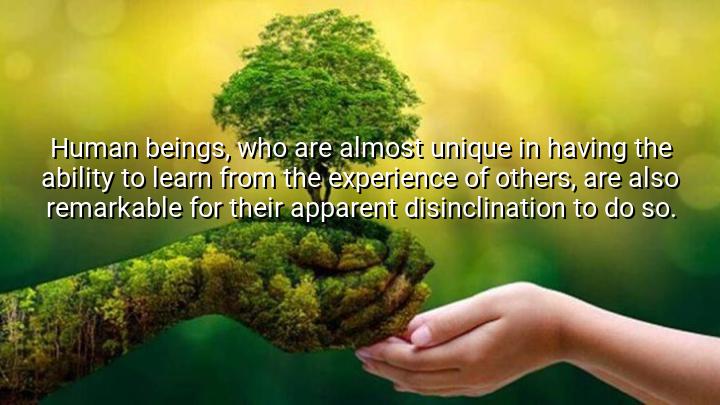




The quote "Human beings, who are almost unique in having the ability to learn from the experience of others, are also remarkable for their apparent disinclination to do so." by Douglas Adams highlights a curious contradiction in human nature. While humans possess the exceptional ability to learn not only from their own experiences but also from those of others, they often choose not to apply this ability. Adams points out a common tendency to ignore valuable lessons, leading to repeated mistakes and missed opportunities for growth.
The origin of this quote is found in Adams’ work as a writer and satirist, best known for his book series The Hitchhiker’s Guide to the Galaxy. His writing often combines humor with sharp observations about human behavior and society. This quote reflects his characteristic wit and critical insight into how humans interact with knowledge and learning.
Adams’ words serve as a reminder of the importance of open-mindedness and humility in learning. The failure to learn from others can hinder progress, both individually and collectively, and contributes to cycles of error and misunderstanding. By drawing attention to this paradox, Adams encourages greater awareness and a willingness to heed the experiences and wisdom around us.
In summary, Douglas Adams’ quote underscores the unique human capacity for learning from others, while lamenting the common reluctance to do so. It invites reflection on how embracing this ability more fully could lead to better decisions and a more enlightened society.

AAdministratorAdministrator
Welcome, honored guests. Please leave a comment, we will respond soon