

However happy people say they are, nobody is satisfied: we always have to be with the prettiest woman, buy a bigger house, change cars, desire what we do not have.
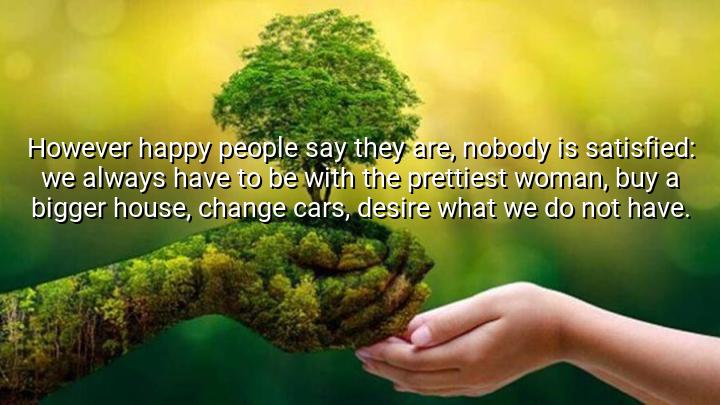




The quote "However happy people say they are, nobody is satisfied: we always have to be with the prettiest woman, buy a bigger house, change cars, desire what we do not have." comes from Paulo Coelho, the Brazilian author best known for his novel The Alchemist. This statement reflects Coelho’s recurring exploration of human desire, contentment, and the illusion of happiness. Through this quote, he critiques the tendency of modern individuals to chase external symbols of success rather than cultivating inner peace.
At its heart, the quote reveals a truth about the insatiable nature of human wants. Even when people claim to be happy, there often remains a sense of restlessness, a yearning for more—more beauty, more wealth, more possessions. Coelho draws attention to how societal standards and materialism push people to constantly compare themselves to others and seek what they lack, rather than appreciating what they already have.
The mention of things like the prettiest woman, bigger house, and new cars serves as symbolic markers of societal validation. These are not merely objects or relationships, but representations of status and self-worth in a consumer-driven culture. Coelho suggests that this endless pursuit leaves us dissatisfied, even when we seem to have achieved conventional measures of happiness.
Ultimately, this quote underscores a central theme in Paulo Coelho’s work: the idea that true fulfillment lies not in acquiring more, but in understanding oneself. It serves as a warning against the trap of desire, reminding us that peace comes from within—not from the endless chase for external validation or possessions.

AAdministratorAdministrator
Welcome, honored guests. Please leave a comment, we will respond soon