

God made everything out of nothing, but the nothingness shows through.
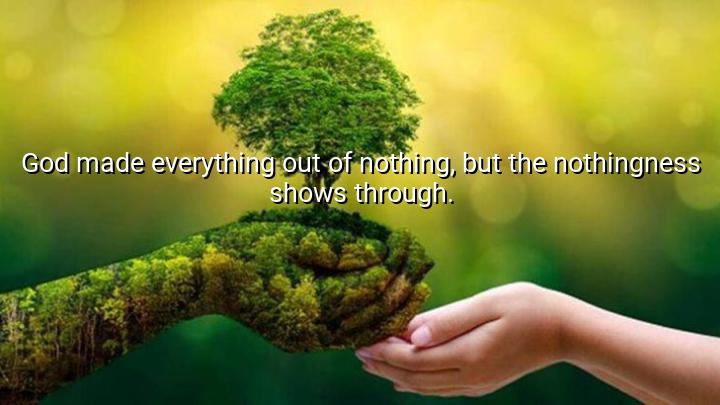




In this quote, Paul Valéry, a French poet and philosopher, presents a philosophical reflection on the nature of creation and existence. The statement "God made everything out of nothing, but the nothingness shows through" suggests that while God (or a divine force) created the world and everything in it from a state of nothingness, that very nothingness still remains visible or inherent in the world. This could be interpreted as a recognition that existence itself is fragile, incomplete, or imperfect, and that traces of the void or absence from which the world was created are still present in the material and spiritual realms.
Valéry’s quote can be seen as a commentary on the imperfection of the universe. Even though the world is the product of divine creation, it still retains elements of chaos, ambiguity, or unfulfilled potential. The "nothingness" might symbolize the mystery or unknowability that persists despite the apparent order and beauty of the world. In this sense, the quote speaks to the inherent limitations of human understanding and the persistent presence of emptiness or void within all that exists, even after creation.
The idea that "the nothingness shows through" could also point to a more existential understanding of life. No matter how much meaning or structure humanity imposes on existence, there is always a sense of lack or void that cannot be entirely overcome. Valéry may be suggesting that this void is a fundamental aspect of human life—something that shapes our experiences and perceptions of the world, even in the midst of our efforts to find meaning and purpose. It may reflect the ongoing tension between the created world and the uncreated void from which it originated.
The origin of the quote comes from Paul Valéry, a prominent intellectual figure of the early 20th century, known for his contributions to poetry, philosophy, and literary criticism. Valéry often explored themes of human existence, the nature of creativity, and the relationship between mind and reality. His quote on creation reflects his interest in the paradoxes and complexities of existence, emphasizing both the divine act of creation and the enduring presence of nothingness within the world.

AAdministratorAdministrator
Welcome, honored guests. Please leave a comment, we will respond soon